Invensys Enters Safety and Simulation Partnerships
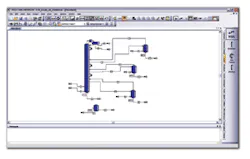
Invensys Operations Management (IOM) has recently signed two new partnership agreements. One of the partnerships is technology based and involves the combination of ACM Automaton Inc.’s Facility Safety software with IOM’s software offerings. The other partnership involves an agreement with Axens, permitting the company to become a sub-licensor of IOM’s SimSci-Esscor PRO/II software for the design, analysis and improvement of chemical processes.
As part of the ACM Automation agreement with IOM, ACM’s process safety decision-support software, Machu Picchu, will be offered along with IOM’s other software for the process industries. The Machu Picchu decision-support tool is designed to provide visibility into process risks and combine knowledge of the plant’s risk parameters, diagnostic alarms and historical operator observations to monitor the integrity of all safeguards 24x7. Based on this information, the system then calculates the level of risk caused by a deviation and provides operators a set of pre-engineered contingency plans or detailed instructions on how to address abnormal situations.
IOM’s partnership with Axens, a technology and services provider to the refining, petrochemical, gas and alternative fuels markets, is designed to “reinforce our presence in the worldwide petrochemical and refining industries,” says Tobias Scheele, vice president, advanced applications, IOM. Under the terms of the agreement, Axens will become a sub-licensor of Invensys Operations Management’s SimSci-Esscor PRO/II software, a steady-state process simulator used to design, analyze and improve chemical processes.
Axens will embed IOM’s PRO/II simulation software into its customized webPOS (Web-based process operations) simulator, enabling it to deliver steady-state simulation for optimization of productivity. Axens’ webPOS provides operations and process engineers the tools needed to perform: off-line engineering studies monitoring the impact of operating variables and feed quality on product yields and qualities; evaluate bottlenecks for new feedstock or new product quality requirements; and make strategic and operational decisions regarding production and product distribution.