Why Manufacturing Automation Startups Stall—And How Better Decision-Making Keeps Lines Moving
Key Highlights
- Define a decision-rights map before the first production shift to clarify authority and responsibilities across teams and OEMs.
- Publish daily operating envelopes to communicate current conditions, approved products and decision owners, preventing operating discrepancies.
- Separate technical correction actions from operational decisions to enable parallel progress and maintain safety and quality standards.
- Measure decision flow by tracking issue resolution times, critical decision delays, and the effectiveness of communication to identify organizational bottlenecks.
- Close issues thoroughly by updating documentation, procedures and training materials to prevent recurring problems and ensure sustained improvements.
- Design startup governance as a deliberate system with clear protocols, roles and escalation paths to enhance decision speed and line stability.
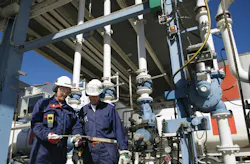
A new manufacturing line can look ready on paper. The equipment is installed, individual machines have completed functional checks, the network is online and the project team is preparing to produce saleable material.
Then the line begins to wait.
A vision station detects a condition not anticipated in the quality plan. The inspection supplier considers the system functional, while operations asks whether production can continue with an additional manual check. Quality has not defined who can authorize that method. An upstream OEM changes a timing parameter, but the downstream OEM does not learn about it until the next shift. Every machine may be capable of running, yet the startup still moves at the speed of its slowest unresolved decision.
This is where many startups get stuck: the equipment works, but the organization has not yet decided how the line can operate.
In my previous Automation World article, Moving Beyond Checklists to Evidence-Based Commissioning of Manufacturing Startups, I described how capability-based evidence can strengthen startup-readiness decisions. This article picks up at the next problem: once the evidence exposes a constraint, how quickly can the organization turn that finding into a coordinated operating decision?
The hidden accumulation of decision debt
Projects accumulate decision debt when a question is deferred because it does not block design, installation or individual machine testing. Who can approve a temporary operating method? Which function decides whether a recurring defect is acceptable for controlled production? Who can prioritize one OEM's work over another's? When does a software adjustment require a quality check, operator briefing or rollback plan?
These questions remain largely invisible until the integrated line begins operating and several functions are affected by the same event.
- Engineers repeatedly explain the same issue to different groups.
- Multiple teams work on technically valid but conflicting priorities.
- A temporary workaround remains in use after its original conditions have changed.
- One shift repeats troubleshooting already completed by the previous shift.
- An OEM waits for authorization even though its technical correction is ready.
- Production stops while stakeholders debate whether the issue is a defect, process limitation, quality concern or training problem.
- That does not necessarily point to poor engineering. More often, it means the project never defined a clear way to make startup decisions.
Why multi-OEM lines amplify the problem
A multi-OEM line has several boundaries, and each participant is focused on its own scope and technical responsibility. A filler may be stable at its intended speed while the case packer needs a different accumulation strategy. A robot supplier may have corrected its motion sequence, but the revised recovery process may require new operator actions. A supervisory-controls integrator may see the entire line state yet lack authority to decide whether production can continue under a quality restriction.
Each supplier can be successful within its own scope and the line can still struggle. What is usually missing is clear ownership of line-level decisions.
The plant or project owner must define who is authorized to make decisions that cross supplier and departmental boundaries, so a complete production decision does not remain unowned merely because its technical pieces belong to several parties.
Create a decision-rights map before the first production shift
A startup team usually has organization charts and contact lists. What it often lacks is a map of decision rights. The map should answer practical questions such as:
- Who may release or hold production after an abnormal event?
- Who approves a temporary manual verification or reduced-rate operating method?
- Who decides whether a change is urgent enough to enter the current production window?
- Who can require multiple OEMs to participate in a single root-cause effort?
- Who accepts the operational consequence when a permanent correction is deferred?
- Who owns the final communication to operators, maintenance personnel and the next shift?
Authority will vary by category: quality controls product disposition, operations controls production priorities, engineering governs technical changes and environmental, health and safety personnel control safety-related deviations. The startup leader coordinates conflicts and prevents decisions from being passed indefinitely between teams.
A decision-rights map is more useful when it names both the technical owner and the operational decision owner. The person who can repair a condition is not always the person authorized to decide how the plant may operate while the condition remains open.
Publish a daily operating envelope
Startup conditions can change several times in a day. A line approved to run one product at reduced speed with additional inspection on the morning shift may not be approved to run a second format at full speed that evening. Verbal understanding is not enough when dozens of people and several vendors are acting on the system.
The startup team should publish a concise operating envelope for each production window. It should state:
- Approved products, formats and rates
- Equipment or functions that remain restricted
- Temporary manual checks or staffing requirements
- Active software and parameter baseline
- Conditions that require production to stop
- Open changes permitted during the window
- Named decision owners and escalation contacts
This does not need to become another large project checklist. It should be a short, practical agreement for the next shift or production block.
When the operating envelope changes, the team should record who approved the change, when it becomes effective and how affected personnel were informed. This prevents the line from operating according to several versions of the truth.
Separate technical correction from operating disposition
Startup meetings often become inefficient because every issue is discussed as if it requires one answer. In reality, most significant issues require at least two parallel decisions.
The first is technical: What failed; what correction is proposed; who will implement it and how will the result be checked?
The second is operational: What may the plant safely and responsibly do until the correction is complete?
Consider an intermittent inspection no-read. The technical path may involve lighting adjustment, trigger timing and algorithm tuning. The operating disposition may require a reduced rate, an additional manual inspection, a limited production quantity or a temporary hold. Separating them allows technical work to continue while the plant defines the next safe operating step.
A useful startup issue record should contain both a technical action and an operating disposition. It should also identify the expiration condition for any temporary method. Temporary arrangements become risky when they have no end time, quantity limit, monitoring requirement or named approver.
Control change velocity during the startup period
A startup team can make a line less stable by changing it faster than people can understand the results. Controls parameters, recipes, inspection thresholds, mechanical adjustments and operator instructions may all change in the same day. Each change may be reasonable, but the combined effect becomes difficult to diagnose.
Establish defined change windows and a shared change log. Before a change is introduced, record the reason, affected equipment, expected result, person implementing it and rollback method. Afterward, record the observed outcome and whether operating instructions must be revised.
The point is to preserve cause and effect. When several OEMs are tuning connected equipment, an undocumented change can invalidate another team's observations and restart the troubleshooting cycle.
For high-risk periods, the startup leader may temporarily limit simultaneous changes. One controlled adjustment with a clear observation period often produces more learning than five rapid changes followed by uncertainty about which one mattered.
Build continuity across shifts
The original problem is not always what costs the most time. On round-the-clock startups, lost context between shifts can be just as expensive.
A useful shift handover should communicate more than a list of open items. It should state what the line was trying to accomplish, what changed, what was learned, what operating restrictions remain and what decision is needed next. The incoming team should know which conditions are approved, which tests must not be repeated and which parameters or mechanical settings should remain untouched.
A short cross-functional handover involving operations, controls, maintenance, quality and relevant OEMs can prevent duplicated work. It should use the same operating envelope, issue log and change records used during the shift, not separate personal notes.
Measure the flow of decisions, not only the number of defects
Startup dashboards often count open issues by supplier or discipline. That information is useful, but it does not reveal whether the project is moving.
A team can have many open issues and still progress if each has a clear disposition; a few unowned critical decisions can block an entire line.
Useful governance measures include:
- Time from issue discovery to an approved operating disposition
- Percentage of critical issues waiting for a decision rather than technical work
- Number and age of temporary operating methods
- Repeated issues that cross shifts without new learning
- Changes implemented without completed communication or rollback information
- Issues closed technically but not incorporated into operator or maintenance standard work
These measures expose delays created by organizational waiting. They also help leaders distinguish a resource shortage from an authority, communication or prioritization problem.
Close issues into the operating system
An issue is not fully closed when a machine runs once after a correction. The organization must also absorb what changed.
Depending on the issue, closure may require an updated operator instruction, maintenance procedure, spare-parts requirement, parameter record, quality control, training item or vendor document. Without this final step, the project may solve the condition during startup only to rediscover it after the project team leaves.
If a temporary method becomes permanent, it should be formally engineered and documented. If it is no longer needed, remove it from the operating envelope and inform every affected shift.
Treat startup governance as a designed system
Manufacturers invest significant effort in machine specifications, controls architecture and test planning. The startup organization deserves the same deliberate design.
Before the first integrated production shift, establish the decision-rights map, issue categories, change-control method, operating-envelope format, shift-handover routine and escalation cadence. Define which decisions stay at the line and which require plant leadership, quality, safety or corporate approval. Ensure each OEM understands both its technical responsibilities and its role in cross-line decisions.
When every machine works and the line still waits, the missing component is often not another sensor, software routine or test. It is a disciplined mechanism for turning technical facts into timely operating decisions.
Startup becomes more stable when the people running it can decide, communicate and learn fast enough to keep pace with the automation.
About the Author
 Muhammad Rafay Ikram
Muhammad Rafay Ikram
Muhammad Rafay Ikram is a Senior Engineering Project Manager whose career spans more than 14 years across industrial automation, controls, commissioning, robotics-enabled material handling, packaging systems and major capital-project delivery. His independent research examines predictive startup readiness, dynamic dependency modeling and constraint-aware industrial automation.
 Leaders Logo
Leaders relevant to this article: