Solid State Automation and Controls Case Study: Cutting Motor Control Center Delivery Time by 50 Weeks
Key Highlights
- The challenge required SSAC to rethink the complete system, from drawing generation to panel build to final commissioning.
- The success of the project helped SSAC reduce current delivery times while adding AI-enabled preventive-maintenance capabilities.
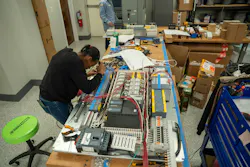
When critical facilities need automation infrastructure, long lead times can put an entire project at risk. For Solid State Automation and Controls (SSAC), in the building materials and logistics industry, a traditional bucket-style Motor Control Center (MCC) came with a 14-month lead time. The facility needed to be operational in eight months.
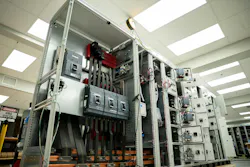
That timeline turned the standard MCC path into a show stopper. SSAC took on the challenge by designing a custom Motor Control Complex, the MC-PLEX, with the speed, safety, reliability and flexibility the customer required. By working with Rittal and using a modular enclosure and busbar platform, SSAC delivered the first system in 22 weeks, saving 50 weeks against the traditional lead time and creating the foundation for a faster, smarter product line. Continue reading to discover how.

About Solid State Automation and Controls
SSAC is a Houston-area systems integrator that designs, builds, and programs PLC- and SCADA-based control systems for industrial customers. The company serves multiple industries, including chemical process, manufacturing, renewables, oil and gas, and government.
“We help our customers automate and control their plants so they can operate them efficiently and safely,” said Nazeeh Melhem, president of SSAC. For SSAC, customer trust is built on expertise, execution and accountability, while a customer-first mindset is central to their approach to every project. “Our mission is to design, build, and deliver high performance control systems from concept to commissioning with the speed and reliability critical industries demand,” Melhem said.
The challenge
An SSAC customer needed an MCC to support a new facility, but the traditional sourcing path came with a 14-month lead time. The customer’s facility needed to be operational in eight months, meaning a conventional approach could have prevented SSAC from winning the project and could have delayed the customer’s facility launch. SSAC needed a way to design, build and deliver an MCC style system within the customer’s required window without sacrificing safety, reliability or long-term serviceability.
The challenge required SSAC to rethink the complete system, from drawing generation to panel build to final commissioning. The team needed an infrastructure platform that could support a custom design, accelerate assembly, and remain flexible enough for future builds and post installation changes.
The Rittal solution
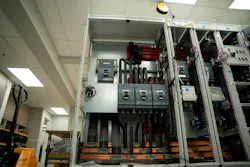
SSAC designed the MC-PLEX, from the ground up with the help of Rittal, which provided the modular infrastructure needed to make the system faster to build, easier to standardize, and more flexible than traditional approaches. The core Rittal solution included:
- VX Enclosures: Rittal’s VX enclosure system provided the modular foundation for the custom MC-PLEX design
- RiLineX Busbar System: RiLineX is a tool-free, modular busbar platform providing reduced assembly time and high field-modification flexibility
- UL-Recognized Components: Pre-tested SCCR ratings and UL-recognized components reduced approval delays
- Eplan Engineering Support: Eplan compressed drawing generation time, reduced redraws, and improved documentation handoffs from engineering to assembly
- Rittal Design Support: Rittal worked directly with SSAC's engineering team to make design modifications that improved assembly efficiency and supported the required timeline
The implementation
Rittal worked closely with SSAC's engineering team to support design adjustments that improved build efficiency and helped the MC-PLEX system meet the accelerated schedule. A critical part of the implementation was eliminating wasted time between engineering and assembly. Using Eplan, SSAC compressed reduced design times while delivering cleaner documentation packages so production could move faster with less rework.
As the system moved into commissioning, SSAC engineers loaded programs into the controllers, configured the network, established connections between system components, and began testing the completed system.
The results
SSAC delivered the custom MC-PLEX in 22 weeks. “We took on the challenge, we designed the MCC system, and were able to deliver it in 22 weeks, which was effectively a 50-week time saving,” Melhem said. “That was our entry point into the MCC world.”
The initial success became the foundation for the next generation of SSAC’s MC-PLEX line. Since that first build, SSAC has continued to optimize the system, reducing delivery time from 22 weeks to approximately 12–14 weeks, with a target of 8–10 weeks in active development.
The results included:
- 50 weeks saved on the first build
- Current delivery time reduced to 12–14 weeks
- 8–10 week target in progress
- Reduced assembly time
- Greater field flexibility
- Cleaner engineering-to-assembly handoffs
- Smarter system capabilities
“Since then we’ve improved the system even more, made it smarter,” Melhem said. “We enabled it with AI and preventive maintenance analytics capabilities. We’re sitting at about 12 to 14 weeks right now and we’re aiming to reduce it even further to 8 to 10 weeks.”
For SSAC, the partnership with Rittal also supports the company’s reputation with its own customers.
“Rittal has put every product through a rigorous engineering testing program,” said Richard Anderson, senior vice president of engineering at SSAC. “We put our reputation on the line with every build, so any product we use has to meet that standard. Rittal is a trusted partner. The products they produce are always reliable and of high quality.”
The partnership
“Rittal’s values are closely aligned with ours, which makes working together easy—but also fun and enjoyable,” Melhem said. “They’re on the bleeding edge, not just the leading edge of technology.”
That alignment is especially important as SSAC continues to refine the MC-PLEX platform and look for new ways to help customers deploy critical industrial infrastructure faster.
“Rittal continues to innovate. We continue to innovate,” Melhem said. “So, we look at ourselves as great partners for Rittal, and Rittal being a great partner for us.”
From a threat to an advantage
By partnering with Rittal, SSAC turned a project-threatening lead time into a competitive advantage. The MC-PLEX gave the customer the MCC-style functionality they needed within the required project window, while giving SSAC a faster, more flexible, and more intelligent platform for future builds.
SSAC is also building on the success of MC-PLEX by developing a switchgear line that expands its offering into the power distribution layer above the Motor Control Complex in industrial facilities. The same principles that shaped MC-PLEX continue to guide the company’s future: fast delivery, smart design, and flexible infrastructure and technology.
Editor's note: this article was originally published on Rittal's website.
About the Author
Matt DeHoyos
Rittal North America
Matt DeHoyos is a senior lead system consultant at Rittal North America LLC.
 Leaders Logo
Leaders relevant to this article: