Proven Integration Tactics That Eliminate The Commissioning Nightmare
Key Highlights
- Align machine, control and facility systems around shared business goals.
- Use early planning and testing to catch integration gaps before commissioning.
- Build capacity and standardized interfaces into designs to support future growth.
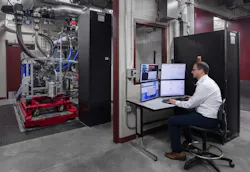
The path from a high-level business goal to a validated technical asset is often derailed by the silo effect, in which machine, process system, and facility integration are treated as separate, disconnected tasks. Each is optimized in isolation yet misaligned in overall execution.
This silo tax compounds across every stage of a multiphase project, where new integration dependencies are introduced and the effects of decisions made in earlier phases are amplified. A collaborative partner-integration model provides a project management methodology designed to bridge these gaps before they create schedule risks and cost overruns.
By utilizing a business-driven framework, this approach ensures that every phase of a capital project is synchronized across three critical layers: machine-level interconnects, process equipment-to-control system communication, and the foundational facility infrastructure. T
he result is a set of tactical milestones that enables teams to deliver an asset that works as intended, on schedule, and on budget, while transforming a complex, interdependent industrial environment from a hurdle into a reliable engine for data-driven decision-making and results.
Aligning three layers before turning the first bolt
Before any drawing is started, a capital project requires a clearly defined answer to a foundational question: what does this asset need to accomplish? That answer, the core business objective, anchors every subsequent technical decision. In multiphase projects, where machine-level interconnects, process equipment communication, and facility infrastructure are developed across overlapping or sequential phases, team decisions can easily drift apart without that anchor. Requirements are missed, not because teams are careless, but because no single team has visibility across all three layers simultaneously.
The consequences are concrete. When a cooling tower is specified to serve two process cells, the controls hardware selected for that system reflects a two-cell scope. If the business case for a third cell existed at the time, even as a contingency, and that requirement never made it into the controls specification, the gap does not surface until the expansion is approved, and, by then, it is too late.
At that point, the original hardware may be discontinued, leaving the team to choose between a costly system replacement or a parallel installation with incompatible interfaces that operators and maintenance staff must manage separately.
The requirement was always there. It was simply never mapped across all three integration layers during planning, where it could have influenced control system decisions.
A business-driven framework addresses this challenge by treating all three layers as a single integrated thread from the outset. Every technical decision, equipment selection, control architecture, and utility capacity is traced back to what the asset must accomplish.
In a multiphase project, this thread extends forward in time as well: future phases may not yet have defined requirements, but their connection points to current decisions are knowable. Accounting for them early keeps options open. The result is a coherent asset across all three layers aimed at a single outcome, rather than a collection of optimized components that do not fully work together.
Using front end planning to de-risk commissioning
Commissioning is the wrong time to discover a missed requirement. Instead, it’s essential to reveal integration gaps, overlooked requirements, and unanticipated issues through test checkpoints set throughout the design and construction phases.
Resolving a gap early in the process, even a subtle one, like a heater that doesn’t reach its target temperature under load testing, is preferable to troubleshooting and re-engineering under pressure when the asset should be producing. The issues that surface at commissioning rarely originate there, but rather from a decision made or not made during the front end planning (FEP) phase and requirement definition.
Readiness benchmarks should be defined early, working backward from the end state. Core process requirements are traced into equipment specifications, control architecture, and facility infrastructure. Utilities, power capacity, and controls hardware are identified, and procurement timelines are set. Go/no-go criteria are established for each phase transition, so teams arrive at commissioning having already verified that the right elements are in place, rather than discovering that they are not.
Multiphase integration work requires a different skill set from day-to-day operations, and having the right people available is important to achieving the schedule. Manufacturers know their process, but they do not build infrastructure around it. An on-loan integration team brings cross-project experience to lead the planning and define readiness benchmarks during that critical time when project schedules are set at the front end.
The integration team also has the expertise to guide commissioning, reducing trial-and-error learning and the risk of late-stage crises.
Future-proofing the physical and digital layers
Planning these three integration layers together is vital when today’s design choices may become tomorrow’s constraints. Addressing that range during FEP, rather than at the next expansion, separates a scalable asset from one that must be worked around.
- Physical layer: Establish the minimum and maximum capacity ranges for utilities, power, and mechanical systems early. The delta between them informs cost and schedule tradeoffs. Reserved space for additional switchgear, for example, costs little at design time and avoids a major retrofit later. Document design intent and reserve capacity in drawings so future teams inherit a plan, not a puzzle.
- Process equipment-to-control systems: Software and controls extend capability without the cost and footprint of physical expansion. An architecture designed for additional signals, rather than a fixed, discrete wiring scheme, allows new measurement or control points to be added through configuration rather than rewiring.
- Machine-level interconnects: Standardizing interface requirements across current and anticipated future equipment keeps the integration layer consistent. Incompatible interfaces introduced later add engineering overhead and operator burden that compound with each new phase.
When headroom is built into all three layers from the start, future phases become an exercise in using planned capacity rather than overcoming the constraints imposed by earlier decisions.
When commissioning reveals what planning missed, it is already too late
The costs of misalignment are often realized at the worst moment, after the completion date when an asset should be producing. Heroic firefighting at commissioning will not resolve the challenges of misaligned architecture because the decisions that created them are already locked in, nor can it recoup costs from a line-down event.
Research by Independent Project Analysis across more than 25,000 capital projects identifies the completeness of FEP as the single strongest predictor of cost, schedule, and operational outcomes, precisely because it is where the decisions that determine commissioning success are either made or missed.
The solution is to implement a clear requirement thread from the initial concept through the control strategy and infrastructure design, and to involve the people who perform this work daily. Working in tandem across all three integration layers from the outset is a project management discipline that helps teams avoid inheriting constraints from earlier decisions.
About the Author
 Leaders Logo
Leaders relevant to this article: