Key Highlights
- Integrated sensors monitor water temperature, chemical concentration, pump pressure and vibration levels to alert teams before equipment failures occur, extending asset life.
- Automated logging of wash parameters and digital cleanliness records simplify audits for highly regulated industries like medical devices and food processing.
- One automotive plant reduced unplanned washing-related downtime by more than 30% in six months through central monitoring dashboard integration and fault alerts.
Manufacturers face a number of problems, two of which cut across multiple industries: Maintaining current operations with fewer operators while continuously improving production efficiency, ensuring traceability, meeting tighter timelines and achieving higher levels of quality throughput.
This is where the convergence of industrial automation and cleaning technology comes into play.
The humble parts washer, once considered a necessary evil of the manufacturing process, has evolved into a smart, connected system that plays a vital role in production efficiency, traceability and uptime.
For decades, wash systems were seen as the “black box” of the production line. Operators would load dirty parts, press start and hope for consistent results. This is why parts washers have traditionally been viewed as an operating expense rather than a revenue-generating asset, unlike CNC machines or other production equipment.
But as manufacturers have leaned into digital transformation, the need for real-time monitoring and data-driven maintenance in every operational facet has become too significant to ignore. As a result, today’s industrial washers can talk to your PLCs, share data with your SCADA system and alert your team before an issue disrupts production.
Turning parts washers into smart assets with IIoT
Modern wash systems are being designed with IIoT (Industrial Internet of Things) functionality baked in, not bolted on. Using integrated sensors, such as conductivity meters, flow meters and temperature probes, these machines continuously collect operational data, including water temperature, chemical concentration and cycle time.
When a wash system communicates with the broader production network through Modbus, EtherNet/IP, OPC-UA or other industrial protocol, it becomes part of the uptime equation.
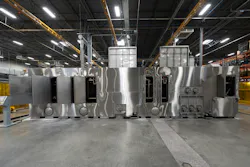
When connected to a facility’s network, this data provides engineers and operators with insights that can drive predictive maintenance and process optimization.
For instance, if pump pressure begins to drop below optimal levels or pump vibration surpasses a certain level, the system can trigger an alert, allowing maintenance teams to replace a filter or service a pump before it fails. This proactive approach minimizes downtime and extends the life of equipment.
As someone who has worked directly with plant engineers and integrators across multiple industries, including aerospace and heavy equipment manufacturing, I have firsthand experience with how these capabilities transform industrial parts washers into performance assets that guarantee higher-quality output.
Beyond the wash with automation and traceability
Automation in parts washing isn’t just about running lights out; it’s about ensuring repeatability and traceability throughout the cleaning process and providing validation to meet regulatory standards. Smart washers can now integrate with robotic loading systems, barcode scanners, part-specific recipes and even vision systems to validate cleanliness.
Today’s industrial washers can talk to your PLCs, share data with your SCADA system and alert your team before an issue disrupts production.
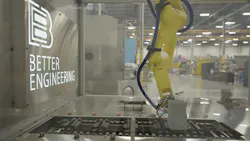
This means each component can be tracked from wash to dry, creating a digital record of cleanliness validation and process compliance.
For highly regulated industries, such as medical device manufacturing or food processing, this level of integration is especially critical as cleanliness specifications are directly tied to product safety and performance. By auto logging wash parameters, such as temperature, chemical concentration and cycle time, these systems simplify audits and quality assurance, allowing teams to focus on throughput rather than using an outdated chart recorder.
Driving uptime through integration
The most effective automation strategies aren’t those that add technology for its own sake, but rather those that adapt intelligently, adjust settings based on assembly line and part data at the end of each cycle, share diagnostic insights with maintenance teams and continuously optimize performance using real production feedback. When a wash system communicates with the broader production network through Modbus, EtherNet/IP, OPC-UA or other industrial protocol, it becomes part of the uptime equation. It can signal downstream equipment when a cycle completes, share diagnostic information with maintenance teams, and even adjust its own settings based on part data from the line.
One automotive plant we worked with integrated its industrial parts washer into a central monitoring dashboard. When a fault occurs, the maintenance team receives an instant alert with the exact location and probable cause. In the first six months, unplanned downtime related to washing dropped by more than 30%.
About the Author
 Ryan Hiss
Ryan Hiss
Ryan Hiss is vice president of sales and marketing at Better Engineering, a U.S. manufacturer of automated aqueous parts washers and cleaning systems. Ryan works directly with plant engineers and integrators across multiple industries to help them automate wash systems that support uptime, traceability, and production throughput. His perspective bridges the gap between automation technology and real-world plant performance.
 Leaders Logo
Leaders relevant to this article: