More Skilled, More Ubiquitous & More Safe: Automating Robot Safety
Key Highlights
- AI alone cannot drive precision and real-time performance in robots.
- Successful integration will depend on architectures that keep these layers tightly coordinated.
- There are two shifts currently shaping what the next generation of robotics looks like: how robots are trained and how they’re built.
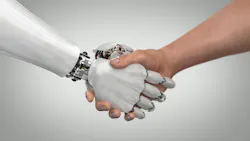
As robots continue to work alongside humans in industrial environments, they are becoming safer coworkers, which is good for both types of laborers and the enterprises that employ them. Here we chat with Jenny Shern, general manager of NexCOBOT, to learn more.
AW: How is robotic safety changing in the industrial space?
Shern: Safety in the industrial space is shifting from a static requirement to an active, intelligent layer that is able to keep pace with evolving human-robot collaboration and the growth of AI-powered robots. As robots become increasingly present in environments, working alongside humans, it’s important to note that AI alone cannot drive precision and real-time performance in robots. While incorporating high-level AI perception, it’s still crucial to prioritize motion control, safety-certified hardware and software designed for seamless human-robot interaction.
Additionally, big tech’s recent investments in the robotics industry is driving a critical ecosystem gap that requires protocol evolution and bridging. These leading tech companies tend to favor proprietary, closed-loop systems which clash with the highly fragmented manufacturing sector’s reliance on established industrial standards like PLCs and EtherCAT, in addition to emerging software frameworks like ROS 2. Until the robotics industry adopts standardized protocols, similar to those in the PC or mobile industries, widespread industrial deployment of robots will be unachievable.
AW: What is on the cutting edge of robotic motion control?
Shern: The main capability at the forefront of robotic motion control right now is legged and humanoid robots’ ability to learn motion control, versus having to be programmed with those functions. What makes this so difficult to achieve is that when the AI model is integrated with motion control, the robot’s “brain” (the AI model) thinks too slowly in comparison to its “body” (the motors), which must move quickly and smoothly. If you make the body wait for the brain every time it needs to move, the result is jerky, stuttering movements.
Even if the AI model is technically smart enough, there needs to be an intermediary who fires the specific motor commands at exactly the right microsecond.
AW: How does one achieve what you label "seamless integration of high-performance computing, real-time control and functional safety"?
Shern: Seamless integration starts with recognizing that high-performance computing, real-time control and functional safety each serve a different purpose, but all have to work together without competing for priority. AI and high-performance computing give the robot perception, planning and decision-making capabilities, while the real-time control layer ensures those decisions are translated into smooth, predictable motion.
Functional safety operates independently, continuously monitoring the system and intervening if unsafe conditions arise. As manufacturers deploy more AI-powered robots alongside human workers, successful integration will depend on architectures that keep these layers tightly coordinated, allowing robots to make intelligent decisions while maintaining the precision, reliability and safety required on factory floors.
AW: Big picture: What does the next generation of robotics solutions look like?
Shern: There are two shifts currently shaping what the next generation of robotics looks like: how robots are trained and how they’re built.
On the training side, real change will come as the industry establishes robust, high-quality video datasets at scale. Once that foundation is laid, AI can train robots across a wide range of complex tasks, including automotive maintenance, aerospace and healthcare, in a fraction of the time programming would traditionally require.
Right now, engineers code robots for a singular, specific task at a time. This shift would allow future robotics solutions to be capable of multi-tasking, and agile enough to be redeployed in response to changing needs. When it comes to building, the industry is shifting towards open, platform-based development.
The next generation of robots, whether they’re humanoids, quadrupeds, or mobile platforms, will not be built by one person. Open platforms will give engineers access to ready-made AI models, control layers and safety technology to build upon, enabling them to focus their human efforts on navigation, perception, voice interaction, and task-specific workflows. Together, these shifts will contribute to faster development cycles, broader deployment across industries and a collaborative robotics ecosystem.
About the Author
 Chris McNamara
Chris McNamara
Automation Group Market Content Director
 Leaders Logo
Leaders relevant to this article: