Work It! Automation For The Fashion Runway
Key Highlights
Fashion Inductor marks the first step in ABB Robotics’ broader rollout of vision-based physical AI.
Designed to meet the extreme variability of fashion and apparel logistics, where products, packaging and operating conditions change continuously.
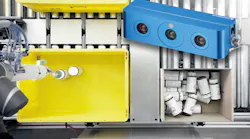
ABB Robotics recently announced an upgrade to its Fashion Inductor functional module with its AI Robot Trainer, making advanced AI easier to deploy, operate and optimize without needing specialist expertise, they claim. The system purportedly reduces engineering and commissioning effort by up to 75%, and is designed to meet the extreme variability of fashion and apparel logistics, where products, packaging and operating conditions change continuously.
Automation in fashion...très chic!
We wanted to learn more, so we posed a few questions to Craig McDonnell, ABB Robotics business line managing director. Take a look...
Automation World: What is unique about fashion in relation to automation and robotics?
McDonnell: Fashion apparel-handling combines high volumes with enormous variability. The ability to successfully automate the handling process requires robots to be able to both recognize and handle a wide variety of garments which are soft and change shape, while their packaging can wrinkle, sag or reflect light.
Seasonal peaks, changing product ranges and unpredictable returns add further complexity.
It is this variability that has traditionally made reliable robotic picking difficult, requiring a level of adaptability that conventionally programmed robots have struggled to achieve.
Solving these issues was the primary goal that has led to the development of ABB Robotics AI enabled Fashion Inductor functional module.
Automation World: What is the ABB Fashion Inductor functional module, and how is it customized for fashion?
McDonnell: The Fashion Inductor functional module is a pre-engineered package combining a robot, gripper, AI vision and control software. Designed specifically for sorter induction processes, it separates individual apparel and accessory packages from a mixed flow and places them onto a sorting system, with a potential throughput of up to 1,300 items per hour per cell, at a picking accuracy of above 99.5%. Its AI vision system can recognize specific garments and identifies stable grasp points on deformable packaging, including polybags, unaffected by issues such as reflections and sagging.
The addition of ABB Robotics AI Robot Trainer allows fashion-specific models to be created and retrained for changing products, packaging and operating conditions, enabling the Fashion Inductor to adapt to changing product lines and packaging types.
Automation World: Is AI making style decisions? Are we automating taste?
McDonnell: No. The Fashion Inductor uses AI to decide how to identify, grasp and move an item. As such, it is designed solely to enable automation of sorter induction processes rather than make aesthetic judgments or choices about what people should wear.
Autmation World: Why are robots particularly suited to fashion and apparel?
McDonnell: The biggest benefit is the Fashion Inductor’s ability to reliably automate the repetitive handling work in fashion logistics. Picking items and feeding sorters require consistent speed and accuracy over many repetitions, often in roles that are difficult to staff and involve fast handling of a wide variety of items to be maintained at a constant rate. Robots can increase throughput and reduce errors, while AI vision helps them cope with changing item shapes and packaging.
The ability to automate the sorter-induction process can be particularly beneficial during periods of peak demand, such as Black Friday and Christmas, which have traditionally required hiring extra labor to scale up operations.