'AI As Part Of The Brain': A Q&A On Robotics Uses In Experimental Workflows
Key Highlights
- PoLARIS is a $20 million NSF-funded project creating a cloud-based lab that combines AI, robotics and polymer science.
- The goal is for AI and robots to autonomously run experiments.
- The project could help strengthen U.S. supply chains and speed innovation in industries like batteries, electronics and manufacturing.
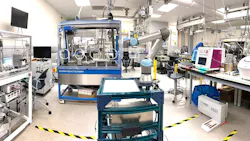
The Polymer Laboratory for AI, Robotics, Informatics, and Standards (PoLARIS) Project aims to combine robots and AI with polymer science to execute autonomous experiments remotely through a new cloud infrastructure.
The project is funded by a $20 million grant from the U.S. National Science Foundation (NSF) and is a collaboration between the University of Chicago Pritzker School of Molecular Engineering (UChicago PME), the University of Chicago Department of Computer Science and Argonne National Laboratory.
PoLARIS aims to strengthen domestic supply chains, reduce dependence on foreign materials, and help American companies compete globally in industries worth over $200 billion annually, according to UChicago PME.
Following the announcement, one of the leaders of the project answered questions from Automation World about how this could change the applications of robotics and AI in the future, as well as what makes the project possible.
Responses below are attributed to Jie Xu, one of the co-principal investigators on the project:
Automation World: What is your title and role in the PoLARIS Project? How would you describe the project and desired outcomes?
Jie Xu: I am an assistant professor at the UChicago Pritzker School of Molecular Engineering and a Co-PI of PoLARIS, leading the hardware infrastructure effort and one of the science drivers. I work on integrating the robotic platforms, instruments, and experimental workflows, and I also co-lead the science applications.
PoLARIS is essentially a cloud laboratory for polymers and soft materials. It brings together the UChicago Pritzker School of Molecular Engineering, UChicago Computer Science, and Argonne National Laboratory, combining materials science, AI, robotics, automation, and advanced characterization. The goal is to allow researchers to run complex experiments remotely and to make materials research faster, more reproducible, and accessible to a much broader community.
AW: The project aims to combine robots and AI with expertise in soft material and polymer science. How does this work in practice?
JX: I like to think of the robots as the hands and eyes, AI as part of the brain, and scientists as providing the scientific intent and judgment.
The robots do the physical work such as dispensing chemicals, running reactions, making films, transferring samples, and running measurements. AI helps decide what experiments should be done, plans out the experiments, analyzes the incoming data, identifies trends or uncertainty, and recommends what to do next. Our software infrastructure then connects these pieces so they operate as one workflow rather than as many isolated instruments.
Scientists can inspect the process, impose constraints, and intervene when their expertise is needed. That human–AI partnership is central to how we think about autonomy. This is a team effort. Science drivers here define the scientific problem, automation researchers build the workflows, and AI and data researchers help determine how the experimental results are used to guide the next step.
AW: How will combining robots with AI play a role in completing autonomous experiments?
JX: The basic idea is to close the experimental loop.
Normally, a researcher runs an experiment, analyzes the results, decides what to try next, and then goes back to the lab. In an autonomous workflow, many of those steps can happen continuously. The robotic system performs the experiment and collects the data, the model analyzes the results and recommends the next conditions, and the system starts the next round. Thus research can proceed much faster.
We have already demonstrated this type of workflow with Polybot, the AI-guided robotic lab at the Center for Nanoscale Materials at Argonne. PoLARIS will extend it beyond a single robotic platform and connect synthesis, processing, and different types of characterization across several facilities.
AW: How might PoLARIS impact how AI is used in experiments in the future across different industries?
JX: I think the broader impact of PoLARIS on soft materials research and engineering could be to shift AI from serving primarily as a data-analysis tool to acting as an active partner in experimentation and scientific decision-making.
Today, AI is often applied only after researchers have collected large datasets. Our goal is to integrate AI directly into the experimental process, creating a framework in which it becomes an integral part of experimental design and execution.
AI can translate scientific objectives into experimental workflows, select promising experiments, respond to unexpected results, integrate diverse data sources, and continuously refine its models as experiments proceed.
If we can establish common interfaces, robust workflows, and interoperable data standards, this approach could extend far beyond university polymer research. It has the potential to transform many industries that must navigate vast design spaces spanning chemistry, formulation, and processing conditions, including coatings, electronics, batteries, packaging, and advanced manufacturing.
AW: Can you give an example of connecting AI, robotics, specialized instruments, and data infrastructure into a remotely accessible cloud laboratory?
JX: Electrochromic materials are a good example. A researcher might be looking for an electrochromic polymer with a particular color and/or optical switching behavior. They could define that target through PoLARIS. An automated synthesis platform could prepare candidate polymers, another platform could make thin films, and then those films could be tested electrochemically and optically. The experimental data would be collected into the same infrastructure, and the model could use those results to suggest the next compositions or processing conditions. Selected samples could also be sent to APS for X-ray characterization to gain more in-depth insights.
We have already demonstrated parts of this workflow with Polybot for autonomous synthesis and inverse design of electrochromic polymers. PoLARIS allows us to connect many more steps and instruments into the same experimental campaign.
AW: How could PoLARIS strengthen domestic supply chains and help U.S. companies compete globally?
JX: Developing a new material can take a long time because companies often have to work through many combinations of chemistry, formulation, processing, and testing before they find something that performs reliably.
PoLARIS can help shorten that process. Companies can use shared automated facilities to test more possibilities, de-risk R&D, and generate consistent data without having to build and operate all of this infrastructure themselves. It can also help researchers evaluate alternative materials or formulations more quickly when there are supply-chain concerns.
AW: What excites you most about the project? What long-term outcome are you hoping to see?
JX: What excites me most is that we have had this concept for a long time, and now we finally have an amazing team together to build it and make it real. I think the process of bringing all these pieces together and making PoLARIS work for ambitious science will be very exciting. We have already seen through Polybot what AI and automation can do for real materials problems. PoLARIS gives us a chance to take that much further, from one self-driving lab to a larger, distributed facility.
I am especially looking forward to seeing what kind of science will come out of PoLARIS once more researchers start using it.
Long term, I hope a researcher can come with a scientific question, access PoLARIS remotely, and turn that question into a reproducible experimental campaign without needing to own or operate the robots and instruments themselves. Ultimately, I would like to see programmable cloud laboratories become a normal part of how science is done, just like shared computing and user facilities are today.
About the Author
Sarah Mattalian
Staff Writer
Sarah Mattalian is a Chicago-based journalist writing for Smart Industry and Automation World, two brands of Endeavor Business Media, covering industry trends and manufacturing technology. In 2025, she graduated with a master's degree in journalism from Northwestern University's Medill School of Journalism, specializing in health, environment and science reporting. She does freelance work as well, covering public health and the environment in Chicagoland and in the Midwest. Her work has appeared in Inside Climate News, Inside Washington Publishers, NBC4 in Washington, D.C., The Durango Herald and North Jersey Daily News. She has a translation certificate in Spanish.
 Leaders Logo
Leaders relevant to this article: