EZ Systems' AI Tool Cuts Machine Vision Training Time by 55%
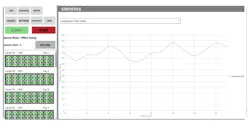
EZ Systems announced that its automated inspection tool EZ Eye is accelerating AI training for machine vision inspection applications, enabling a 55% reduction in the work hours required to train deep-learning systems for challenging inspection applications.
The company claims EZ Eye achieves this using EZ Sift, an algorithmic tool that accelerates the training process for deep learning-based vision systems.
Traditional image grading requires human operators to manually sort through extensive image datasets to assign a pass or fail designation to each image, a time-intensive process that becomes more challenging when training systems to detect rare objects that may occur in less than one percent of inspected items.
EZ Sift applies cyclic optimization principles to identify patterns in human grading behavior, allowing the system to automatically categorize similar images and focus human attention on grading novel or ambiguous cases.
EZ Systems said this sorting capability has proven to be effective for small object detection scenarios, where testing has demonstrated the technology’s ability to maintain model accuracy above 96% while reducing the time that human operators spend grading by as much as 97%.
Quality control operations are showing more interest in AI-based machine vision inspection systems, driven by more stringent regulatory requirements and demand for product traceability. EZ Systems noted that EZ Eye can perform intelligent automated inspection tasks while generating comprehensive documentation, making it applicable to regulated industries that require detailed compliance records.
“The technology doesn’t just accelerate and simplify the training of AI-based machine vision systems, it enhances the accuracy of inspection operations — particularly those tasked with foreign matter detection,” said Ahmed Tawfik, CEO at EZ Systems.
EZ Eye can integrate with virtually any machine vision or process control system, according to EZ Systems.
More vision system coverage from Automation World: