New Solid-State Platform for Industrial LiDAR Sensors
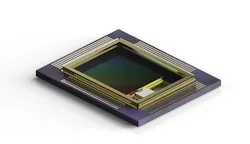
Voyant Photonics, a supplier of chip-scale frequency-modulated continuous-wave (FMCW) LiDAR technology, announced its Helium platform of solid-state LiDAR sensors and modules.
Built on a silicon photonics chip, the architecture is designed for use in a variety of industrial automation, robotics and mobile autonomy applications.
The FMCW LiDAR chip uses a two-dimensional array of surface emitters to create a solid-state LiDAR. The Helium platform also supports multi-sensor configurations. For example, enabling the combination of a wide-FoV (field of view) short-range and narrow-FoV long-range sensing in one system to deliver a cost-effective LiDAR system for advanced perception applications. The result is a compact 4D sensor that meets industry standards for safety and reliability.
The Helium platform LiDAR is an extension of Voyant’s Carbon product line, which has been proven in two-dimensional beam steering on a silicon-photonics platform. According to Voyant, this was an industry first.
Key advantages of the Helium LiDAR sensors and modules include:
- True solid-state — no MEMS (micro-electromechanical systems), polygon scanners or rotating assemblies.
- High-resolution FPA (factorized power architecture) spanning from 12,000 pixels to more than 100,000 pixels.
- Long-range FMCW performance, per-pixel radial velocity.
- Software-defined LiDAR enabling adaptive scan patterns and region of interest.
- Compact size: as small as a matchbox (<150 g mass and <50 cm³ volume), making it practical for mobile robots and compact industrial systems.
- Field of view and range can be tailored with different lenses, and the platform scales from core module options to fully enclosed sensor.
More robot sensing insights from Automation World: