How To Scale Warehouse Robotics From Pilot Projects To Full Production
Key Highlights
- Define the business challenges automation must address before choosing or expanding robotic solutions.
- Coordinate robots and warehouse systems through interoperable architecture, shared visibility and dynamic prioritization.
- Plan for exceptions and keep employees involved in managing disruptions and operational decisions.
- Monitor performance after go-live and adjust workflows, workloads and system settings as needs evolve.
- Measure success by the operation’s ability to adapt and maintain performance—not by the number of robots deployed.
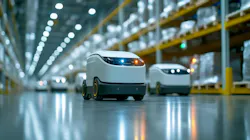
For many warehouse operators, the case for automation is no longer difficult to make. Rising order volumes, increasingly complex operations, labor availability challenges and fluctuating demand are putting pressure on organizations to move faster while maintaining accuracy and service levels. At the same time, end customers increasingly expect shorter lead times, greater flexibility and consistent delivery.
Robotics can help address these pressures. Moving from a successful pilot to a production environment is not simply a matter of deploying more robots. The more automation an operation introduces, the more systems, interfaces and workflows need to work together.
Scaling robotics successfully requires organizations to expand automation without disrupting operations, limiting future flexibility or undermining the original business case. That starts with treating a robotics pilot as the beginning of an operational strategy, not the end of a technology evaluation.
Start with the business problem, not the robot
A pilot may demonstrate that a robot can perform a specific task efficiently, but production environments are rarely as contained as a pilot. Before scaling, organizations need to understand what is driving the need for automation in the first place. Operations may be preparing for sustained volume growth, responding to seasonal peaks, addressing labor constraints, reducing lead times or improving service levels.
Those factors should shape how a solution is evaluated. A technology that performs well in one controlled process may not deliver the same value when volumes fluctuate, product mixes change or additional automation is introduced.
The goal should therefore be to assess whether the solution can support the operation's broader requirements over time, rather than simply whether it performs well under pilot conditions.
Scaling means orchestrating, not simply adding
As automation expands, warehouses increasingly rely on a combination of robotics, automated storage and retrieval systems, conveyors, warehouse management systems, warehouse execution or control systems and other technologies. Each may perform a different function, but collectively they need to operate as one system. This is where interoperability becomes critical.
Adding another robotic solution can introduce another interface, data stream or operating logic. Without an effective orchestration layer, that complexity can make it more difficult to understand what is happening across the warehouse and respond quickly when something changes.
A scalable architecture should allow different technologies to exchange information and coordinate activity. Interfaces with the warehouse management and execution environment need to support the flow of orders and information, while real-time visibility can help operators understand capacity, performance and emerging bottlenecks.
Dynamic order prioritization is another important consideration. When demand changes or a bottleneck develops in one part of the operation, the system needs to adjust priorities and resources rather than allowing one isolated process to constrain the entire operation.
This is why a vendor-agnostic approach can be valuable. Rather than designing an operation around a single technology provider, companies can combine solutions based on the requirements of individual processes while maintaining an overarching layer of coordination. The objective is not maximum automation, but the right combination of technologies working together.
Plan for exceptions before they happen
Production environments will inevitably encounter exceptions. A robot may be unavailable. A workstation may become a bottleneck. An unexpected order surge may change priorities. A downstream process may not have the capacity to keep pace with an upstream one.
These scenarios should be considered during the transition from pilot to production. The more automated an operation becomes, the more important it is to have visibility into how individual systems affect one another. A warehouse control or orchestration layer can provide that broader view, helping teams identify where a disruption is occurring and determine how the operation should respond.
This also reinforces the importance of keeping people involved. Automation should reduce repetitive manual work and allow employees to focus on higher-value activities, but people remain responsible for managing exceptions, making decisions and optimizing the operation.
Optimization does not stop at go-live
One of the biggest mistake organizations can make is treating deployment as the finish line. Once a robotic system is operating in production, companies should continuously monitor performance against the original business objectives. Throughput, cycle times, bottlenecks, peak-period performance and employee interaction with the technology can all reveal opportunities for improvement. Those insights may lead teams to adjust workflows, change system parameters, rebalance workloads or introduce additional technologies.
This ongoing optimization is particularly important because warehouse operations are not static. Volumes, product mixes, customer expectations, and business strategies change. A production environment that performs well today needs to remain adaptable tomorrow.
That makes modularity an important consideration from the outset. Organizations should avoid creating automation environments that are difficult or costly to modify when requirements change. Instead, they should look for architectures that allow technologies to be added, adjusted, or replaced without requiring the entire operation to be redesigned.
The real measure of scale
The success of a robotics deployment should ultimately be measured by more than the number of robots in operation. A scalable automation environment is one that can absorb higher volumes, adapt to changing requirements, and maintain performance as complexity increases. Achieving that requires the technologies within the warehouse to function as a coordinated environment, with the visibility and flexibility needed to continuously optimize operations.
The transition from pilot to production is less about proving that an individual robot works and more about proving that the broader operation can work and continue to evolve with automation at its core.
For organizations facing growing volumes, tighter labor markets, and rising customer expectations, that distinction will increasingly determine whether robotics becomes a sustainable competitive advantage or simply another technology investment to manage.
About the Author
 Andreas Podwojewski
Andreas Podwojewski is managing director of North America and Brazil for Arvato.

 Leaders Logo
Leaders relevant to this article: