Bridging The Gap From Legacy Hardware To Industrial AI
Key Highlights
- Aging plants can extend the life of legacy equipment by retrofitting motor control systems with smart VFDs instead of replacing entire production lines.
- Modern VFDs and IIoT connectivity provide real-time data on motor performance, load capacity, and maintenance needs, helping reduce downtime.
- A secure software and networking layer, including private VPNs and data translation tools, enables legacy assets to support AI and advanced analytics while maintaining cybersecurity.

Every year, manufacturers are pressured to continually improve their facilities and output to meet current standards. However, what happens when outdated industrial plants meet cutting edge AI systems and need to integrate?
The hardware swap
Part of what makes bridging 30-year-old machinery to modern AI systems so difficult is an unspoken industry reality: The engineers who built and understood legacy medium-voltage power systems are retiring, creating a significant experience gap on the factory floor.
Taking out any part of machinery from your site triggers downtime, leading to a domino effect of customers not receiving what they’ve ordered. So being able to physically retrofit your outdated motor control centers (MCCs) without the need to take your entire production line apart can make all the difference in the world. The use of smart variable frequency drives (VFDs), helps you understand when maintenance is most likely needed, allowing you to be proactive about your decisions on the floor, rather than reactive.
Facing reality: obsolete assets
Many plants around the country and world rely on outdated electrical equipment and legacy motor controls that were built last century. Die changes, motor upgrades, or even full replacements can be costly. Upgrading to smart automation can help avoid entire machine overhauls that bring your production to a standstill.
Targeted retrofitting
Upgrading equipment doesn’t have to be a black and white process. In fact, blanket overhauls are what cause a drastic drop in output. Targeting specific motor control systems that need to be updated to smart alternatives helps to keep your floor running while still making forward-thinking choices to benefit your company long term.
Rebuilding your MCCs
One major snag that emerges when working with older equipment is making sure legacy infrastructure can handle the new smart technology while ensuring there aren’t any issues with vendors. A practical technical approach centers on “blended brand” engineering – building or retrofitting motor control centers (MCCs) using multivendor components to keep what works while upgrading critical drives.
The data pipeline and cybersecurity
Embedded IioT capabilities in modern VFDs allow operators to extract and publish drive data in real-time to the machinery, allowing you to keep the plant floor systems online, but isolated from the general public on the internet.
Maximize your uses
After putting the physical VFDs into place on the floor, accessing the machine’s internal data via the integrated IoT function will allow you to extract and publish the mission-critical information on the device’s drive. This can include:
- Motor behaviors
- Load capacity
- Performance and quality control
Deploying mission-critical data
All of the information that was stored is now accessible in real-time, creating a smooth flow of data that can be used across your site. In order to achieve this, you’ll need physical networking such as:
- Fiber optics
- Copper runs
- Wireless systems
Most plants and physical sites already have this set up, meaning you can take advantage of the systems already in place.
Securing the data pathway
With this much information being available, there is naturally a large cybersecurity risk, which is why maintaining isolation from the general public on the internet is critical. Separate your plant floor operations and corporate office activities and securely extract data by following this tip:
Route any and all data through a private VPN so it can be monitored and issues can be quickly diagnosed.
This is in accordance with critical infrastructure guidelines for proper data management.
The software bridge
Mapping the layers
There are levels when it comes to analytical systems, and they all have a role to play. A software bridge helps to move data from the base level all the way up to the final level, and essentially functions as a translator between each move. This prevents levels from being skipped and ensures information is passed fluidly, and that by the time it reaches the upper level where AI models live, it hasn’t undergone a dramatic transformation.
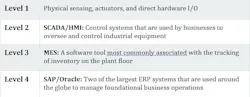
Data collection at the edge
Modern level 2 SCADA platforms (such as Ignition) can reach the VFDs and collect information in two different manners.
- Utilizing native drivers to poll for the data
- Publishing only when there is a tangible change in the data
Thus, it’s now possible for these platforms to be physically housed inside the MCCs on site and collect the data locally before passing it up the levels to be processed. Programs like Ignition also have historical logs, which can be useful when looking back at the data for statistical significance, and when working within the software bridge.
Where AI takes the lead
SCADA platforms work fluidly within the bridge when graduating data to the next level in easily understood summaries. When the information is ready to be accessed by larger ERP systems, it can process all the vital business operations quickly:
- Confirmation of production
- Bill of materials
- Rate of downtime compared to uptime
- Maintenance requirements
An example of this would be when a recurring VFD overcurrent pattern begins automatically creating a maintenance notification in the ERP system. This is where integration really shows its full potential.
Traversing the gap
Together, these three stages of integration show how it’s possible to turn an outdated production line into the foundation for cutting edge AI systems, without bringing the floor to a standstill.
About the Author
Mike Gagne
ELCON Technologies
Mike Gagne is the oresident of ELCON Technologies, a Pittsburgh-based electrical automation, power, and turnkey systems integration company founded in 1988. He specializes in helping industrial and municipal facilities modernize legacy critical infrastructure.


 Leaders Logo
Leaders relevant to this article: