Your Dashboard Is Only As Reliable As The Data Behind It
Key Highlights
- Manufacturers lose trust in dashboards when inconsistent, missing, or poorly governed data creates conflicting metrics and reports.
-
Strong data foundations require standardized naming conventions, clear metric definitions, contextualized data, and a single source of truth across OT and business systems.
-
Reliable, connected data supports more than reporting, enabling process improvement, quality management, predictive maintenance, and AI initiatives.
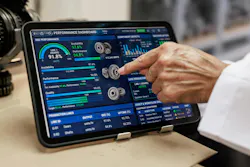
After months of requirements workshops, build reviews and careful formatting, the dashboard finally goes live. The charts look sharp, the colors add depth, and the team is ready to use them in the first production meeting, right up until someone scans the numbers and says, "I'm not sure that's right."
For a manufacturer, that small moment can pull a project off course quickly. If supervisors, operators or finance teams lose confidence in the data, they start checking the dashboard against spreadsheets, handwritten notes and gut feel, and the tool that was meant to create alignment becomes another thing to debate.
The issue is rarely the visual layer. OEE may look different depending on who calculates it, finance and operations may pull output figures from different systems, and missing, late or handwritten data doesn’t become trustworthy just by being displayed in a polished chart. These are foundation problems, and it’s more cost-effective to deal with them before go-live than after.
Here are three foundations worth checking before go-live.
1. Name things once
In almost any plant you'll find equipment tagged in different ways: PUMP3_RUN_ST, Pump 3 Running, P3_Status. They may describe the same signal, but across lines or sites those differences quietly break joins, reports and comparisons.
A useful structure needs one convention across sites and vendors, a plant hierarchy people recognize, and consistent units and data types.
Three tags become one path: Site1/Packaging/Line2/Pump3/Running
The same applies on the business side. If a "production order" in ERP and a "works order" in maintenance are treated as separate things, the gap usually ends up in a translation spreadsheet that one person maintains, and nobody trusts.
2. Give your data some context
A temperature reading of 74 means little without context. Which asset, product, batch or shift? Was the machine running or idle? Much of that information already exists in business systems, so capture it when the data is collected rather than rebuilding it by hand later.
Metric definitions can also succeed or fail here. Disagreement usually comes from what’s included, not the formula itself. Is a planned changeover downtime or scheduled time? Are micro-stops logged at all? Two sites can answer differently, and both call the result OEE.
Define metrics once, give them owners, and let the same calculation drive every report.
3. Get your systems talking properly
PLC, SCADA and historian data need to meet ERP, MES, maintenance and quality data. They rarely share timestamps, identifiers or update rates. A PLC logging in local time and an ERP posting in UTC is enough to push a shift's output into the wrong day.
Aim for:
- A single source of truth for each data element, with a named owner
- Aligned time bases and reliable shared keys (work order to machine to batch)
- Visible handling of gaps and poor-quality values.
Ownership matters here. When systems disagree, someone needs the authority to decide which source wins, and that’s a people decision before it is a technical one.
Good data practices unlock more than dashboards
Reliable data foundations do more than make a dashboard easier to trust. Consistent naming, shared definitions, clear ownership and connected systems create reusable building blocks for process improvement, quality reporting, predictive maintenance and AI. Treating data practices as core infrastructure means each project strengthens the next one, instead of adding another reporting layer to reconcile later.
A five-minute check to help set good data foundations
Use these questions in your next project review:
- Is there a documented naming standard for plant and business data, and is it followed?
- Is context captured at source, or reconstructed later?
- Is each key metric defined once, with a named owner?
- Do we know the source of truth behind every figure on the dashboard?
- What happens to missing or poor-quality data, and does everyone know?
- Do identifiers match across OT and business systems, or are they translated somewhere in the middle?
If two or more give you an uncertain answer, look at the foundations before anything goes live.
What to do if you think your data foundations need work
If these questions give you pause, it is worth addressing the foundations before go-live. Start with one line or area, prove the approach, then scale. Because a dashboard is only valuable when the people using it trust what it tells them.
This is where the collective experience of SAGE Group shines, working with manufacturers to set consistent, secure data foundations through integration, automation and ongoing support.
About the Author
 Gareth Williams
Principal, Nukon
Gareth Williams is the Business Development Manager at Nukon, A Tetra Tech Company, and part of the SAGE Group. SAGE is a certified member of the Control System Integrators Association (CSIA). For more information about SAGE Group, visit its profile on the Industrial Automation Exchange.



 Leaders Logo
Leaders relevant to this article: