Industrial Ethernet Switch Selection: Choosing Among Managed, Unmanaged or Single Pair Ethernet
Key Highlights
- Managed switches offer essential features like VLANs, redundancy protocols, and traffic monitoring that unmanaged switches simply cannot provide, making them the preferred choice as industrial networks scale and security demands grow.
- Single Pair Ethernet (SPE) technology reduces cabling complexity while extending network reach up to 1,000 meters — ten times the distance of traditional Ethernet — making it ideal for sensor-level field applications and IoT architectures.
- OEMs tend to favor unmanaged switches for simple machine-level networks, process industries lean heavily on managed switches for uptime and security, and discrete manufacturing shows growing interest in SPE for long-distance connectivity.
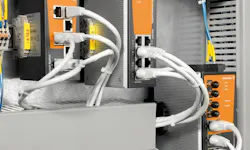
Selecting the right Ethernet switch for your industrial network depends on several key factors, including application requirements, distance, performance, security monitoring and, of course, overall cost. This choice often comes down to understanding when an unmanaged or managed Ethernet switch or single pair Ethernet switch is the right fit within your overall network architecture.
To learn about the decision-making process surrounding the selection and implementation of industrial network switches, Automation World spoke with Basma Ahmed (BA), industrial Ethernet product manager at Weidmuller, a supplier of smart industrial connectivity and industrial internet of things, technologies and services.
Hear the full podcast discussion with Basma. This podcast was sponsored by DigiKey.
AW: Let's start by looking at some of the key differences between managed and unmanaged switches. How do you decide when an unmanaged switch is sufficient versus when a managed switch is required?
BA: The decision usually comes down to the complexity of a system, its criticality and visibility. This means that an unmanaged switch is sufficient when the network is small and non-critical. For example, a simple system where devices don't change, downtime is acceptable and there's no need for diagnostics or control. Essentially, an unmanaged switch is a low-cost, plug-and-play switch.
A managed switch, on the other hand, is required as soon as you need control or insight over a network with multiple machines, segmented traffic, uptime requirements or cybersecurity considerations, or if a network issue will stop production and be hard to troubleshoot without visibility.
AW: Are there certain managed switch features you consider to be essential?
BA: Definitely. First there is need for VLANs, which are usually used for segmentation and basic security. The next most important feature right now is redundancy. Managed switches come with redundancy protocols like MRP, RSTP or ring topologies to protect uptime. Then you should look for features such as diagnostics and monitoring through the SNMP port, mirroring alarms and logs.
User management and access control is another very important feature that comes with managed switches to provide secure configuration. These features directly support reliability, troubleshooting, speed and, most importantly, cybersecurity — all things industrial customers care about once a network scales.
Single Pair Ethernet can play a part in future planning when companies are thinking beyond the control cabinet and toward field-level Ethernet, such as in IoT architectures and sensor-to-cloud communication. SPE enables that physical layer evolution.

AW: How do these choices between switches affect an end user's overall network security strategy?
BA: The switch choice plays a foundational role in security. For example, a managed switch enables defense in depth, segmentation, controlled access, traffic filtering and monitoring. They do not entirely replace firewalls, but they do make firewalls more effective. Unmanaged switches, by contrast, are essentially, transparent pipes. They don't actively weaken the security, but they can't enforce it, which limits how robust the overall security strategy can be.
AW: Speaking of security, there's been a good bit of discussion recently about unmanaged switches and their security risk due to open ports, lack of traffic prioritization and limited monitoring capabilities. Considering that, what would you say to an industrial company that has heard about these issues and is concerned about using unmanaged switches on their network?
BA: From a cybersecurity standpoint, industrial companies today are operating in a very different environment than they were even five years ago. Frameworks such as IEC 62443-2 often emphasize the importance of having a structured cybersecurity management system with defined responsibilities and monitoring, but unmanaged switches offer no visibility, no access control role and no ability to enforce security policies, which makes it difficult to align with cybersecurity requirements. For example, unmanaged switches don’t have any VLAN segmentations or traffic monitoring or logging, and no ability to disable unused ports.
So, in a modern industrial network, especially in environments connected to enterprise systems, these capabilities are increasingly expected. All OT systems now require a cyber secure device. With that said, unmanaged switches are not automatically insecure. They are still useful in small to medium networks where fully isolated, machine level networks do not require any kind of complexity. This means they can still be a very cost effective and reliable solution, but for most industrial companies that are moving towards Industry 4.0, managed switches provide the visibility control and policy enforcement necessary to meet today's cybersecurity expectations.
Unmanaged switches are not automatically insecure. They are still useful in small to medium networks where fully isolated, machine level networks do not require any kind of complexity.
AW: What about Single Pair Ethernet switches? How can companies know when these switches are the better choice for an application, rather than traditional Ethernet?
BA: Single Pair Ethernet (SPE) is a very interesting technology. Instead of the traditional four pairs of wire in an Ethernet cable, SPE only requires two pairs and it can run longer distances. Traditional Ethernet can extend up to 100 meters, but with SPE we are now looking at distances up to 1,000 meters. So, with SPE, you have this smaller, lighter cabling that can also be used to power low-power field devices like sensors out in the field. By using these SPE switches, not only can users communicate over longer distances, they also won’t need to use as many switches, as we now have one switch that can communicate up to 1,000 meters. So, if you're replacing a legacy field bus or designing a new architecture where space, weight or distance matter more than your bandwidth, SPE is often a better fit.
AW: As companies plan for the future growth of their industrial network, can you tell us about how these plans affect the decision when choosing among unmanaged, managed and Single Pair Ethernet switch choices?
BA: Future plans should heavily influence today's choices. In my opinion, if expansion or higher security requirements are even a possibility, managed switches act as a form of long-term protection against costly redesigns later on. Managed switch features like VLAN, segmentation, redundancy protocols, traffic prioritization, port control and diagnostic capabilities allow networks to scale without replacing the core infrastructure.
Also, cybersecurity must be a part of that forward-looking decision. There are a lot of bad actors out there, so cybersecurity is increasingly becoming a norm in OT systems. And people are looking at cyber secure switches and managed switches to provide that. They also provide the technical foundation to support these principles, like the ability to disable unused ports, implement role-based access and monitor network traffic.
Unmanaged switches may still be suitable for very small, isolated, machine level networks with limited growth expectations. However, if there is any likelihood of integration with a plant-wide system, or even scalability in a critical environment, a managed switch is much preferred.
Single Pair Ethernet can play a part in future planning when companies are thinking beyond the control cabinet and toward field-level Ethernet, such as in IoT architectures and sensor-to-cloud communication. SPE enables that physical layer evolution.
A managed switch is required as soon as you need control or insight over a network with multiple machines, segmented traffic, uptime requirements or cybersecurity considerations, or if a network issue will stop production and be hard to troubleshoot without visibility.
AW: Getting a bit more granular around these switch decisions, are there any specific criteria you would recommend to build, say, a switch selection matrix for a new project?
BA: A solid selection matrix usually includes network size and topology, the criticality of uptime, security requirements, protocol and real time communication requirements, environmental conditions such as temperature and electromagnetic compatibility, what certifications are required, power requirements, what SPE power classes are needed and expected scalability.
Ask yourself: How big of a network do you expect this to become?
AW: Based on your work with industrial companies, can you tell us how the type of switch decisions we've been discussing are actually playing out across industry today? For example, do certain industries tend to lean towards certain switch types?
BA: They do have preferences. From what I’ve seen, OEMs, for example, still favor unmanaged switches inside machines. But when you get into the process industries like oil and gas, chemicals, water and wastewater, they lean strongly towards managed switches due to the uptime and security demands. In discrete manufacturing, we often see a mix of all three types — unmanaged for simple networks, managed for critical networks and plants, and growing interest in SPE for sensors in the field. The rail industry leans more towards the SPE because of its capability to span long distances. And in data centers, which are a hot topic these days, managed switches are definitely preferred for their strong security redundancy and protocol support. Overall, we see networks switch choices becoming more intentional as switch selection is no longer just about cost, it's about architecture, security and long-term value.
More industrial communications insights from Automation World:
About the Author
 David Greenfield
 Leaders Logo
Leaders relevant to this article: