How Software Licensing Transforms Industrial OEM Revenue: From Hardware Complexity to Recurring Profits
Key Highlights
• Managing hundreds of product lines with thousands of components creates mounting development, manufacturing and support costs that erode profit margins.
• OEMs like Stäubli Robotics use single software packages with features that can be turned on/off, allowing customers to start small and upgrade over time without hardware changes.
• Software-based models reduce lumpy revenue cycles tied to 5+ year capital purchases, improving forecasting through subscriptions, usage-based pricing and modular licenses.
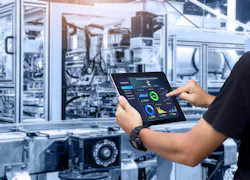
For years, automation device and equipment manufacturers have differentiated their products by creating different hardware variants, different models, different configurations, different physical features for different customer needs. The problem with this approach is that it requires OEMs to manage hundreds of product lines with thousands of different components. And each variant means separate development costs, manufacturing costs and warehousing costs, as well as ongoing support costs.
As this hardware complexity increases, profit margins have tended to decrease, leading this hardware-focused approach to become economically unsustainable.
But software capabilities are now offering industrial equipment OEMs a way out of this. Instead of building numerous different machines or devices, they can build one or a few core platforms with numerous different capabilities available via software rather than hardware differentiation. And OEMs who understand how to leverage software for product differentiation can use this approach, not just to lower operational costs, but open up new revenue streams and build stronger customer relationships.
To learn more about this, Automation World spoke with Dale Hopkinson (DH), senior product manager with Thales, a supplier of technologies for the aerospace, defense and security industry and a provider of cybersecurity and digital identity technologies.
AW: For years now there's been a lot of discussion about how industrial automation hardware has largely become commoditized to a certain degree, requiring OEMs to maintain inventory for hundreds of different products with thousands of different components. From the work you do with industrial device manufacturers, can you talk about how this is playing out in industry today?
DH: When I look across this space, there is a shift toward software differentiation because the hardware differentiation model is just hard to sustain. The hardware changes are costly, certification cycles are long and, let's face the reality, once a device is deployed in the field it is difficult for someone to adapt that in production. So, from our perspective, we see a number of things happening around having the same software support multiple use cases that can deliver different performance levels and increase the lifetime value of an existing device. At the same time, OEMs are digging into more customer segments and sub-segmenting even their existing customers. This software differentiation approach is fundamentally more scalable, which enables more recurring revenue; and this is key because it’s hard to drive recurring revenue from hardware. Typically, the only path to do this with hardware is with maintenance. But with the software, OEMs have several ways to drive recurring revenue from the software in terms of access rights and bundling plans.
By starting with a flat rate subscription, from there you can find the right balance for your products and users in terms of which features should be on and off in the plan.

AW: How does this approach of differentiating hardware by using software work for OEMs?
DH: A good way for me to explain how it works it to share an example. One of the companies we work with is Stäubli Robotics. They’ve gone down a path where they're increasingly differentiating their products on the software that's controlling the robots — things like simulation, programming, monitoring, even ecosystem integration — rather than just delivering different hardware variants. The key for them is in how they license and package their software capabilities. Licensing is important because, as OEMs go down this path of differentiating their products with software, if they're not using licensing, the challenge they’ll face is having many different software versions or software packages to manage. But Stäubli worked with us to develop a single software package through licensing. This allows them to turn features on and off based on what their customers want, allowing Stäubli to deliver new software capabilities through upgrades or upsells. As a result, Stäubli has arrived at a state where they're keeping their hardware stable, while licensing the software features and different modules that they and their customers have found value in. This has been so successful for them that they're looking at adding more subscription-based business models as they think about scaling their business.
AW: When manufacturers shift from focusing on selling hardware to monetizing software features, how does this change their revenue predictability as well as the value the end user gets from the product?
DH: I just got off a call with a company where revenue predictability is key for them. The software differentiation approach delivers this in two ways. First, on the buying side, there's less pressure for end users to buy the maximum capability since all the capabilities of a device or piece of equipment is not baked into the hardware. This reduces the pressure for end users to buy the maximum capability upfront, allowing them to expand over time by purchasing software updates, new features or performance improvements. And this doesn’t require hardware being changed to add new value after initial purchase. Second, when companies can naturally step into new tiers and new pricing plans, OEMs see much better ROI from the revenue side because their revenue streams will be less lumpy. With a hardware-focused sale, the biggest revenue change comes with the initial deal, meaning that OEMs need to wait on a new capital cycle from existing customers to drive more revenue. And that's usually 5 or more years. Over time, the recurring revenue from software licenses smooths out those lumps in the revenue path. With the right model, OEMs can better forecast renewals, expansion and upgrades based on active usage and not just shipment volume.
This software differentiation approach is fundamentally more scalable, which enables more recurring revenue; and this is key because it’s hard to drive recurring revenue from hardware. Typically, the only path to do this with hardware is with maintenance. But with the software, OEMs have several ways to drive recurring revenue.
AW: Speaking about licensing models, there are numerous different models used with industrial software. How should OEMs approach the decision around which model or models to use?
DH: The most common model is a flat subscription. This is usually the first step for OEMs. The flat subscription means you get pretty much all the functionality in the software at some subscription level. Everyone pays the same price, and they get the same functionality. Another model is usage based, where users pay based on consumption. In the industrial space, most OEMs are leaning to use of modular licenses, where different features can be turned on and off. This gives OEMs the ability to have different plans. And I’m seeing a trend toward OEMs adopting a hybrid approach where they have that modular license plus some level of usage license as well. This is coming into play with AI, which has changed the entire economics of subscription licensing.
AW: How granular should manufacturers get with modular licensing? Are we talking about licensing every capability or are there practical limits that you would recommend?
DH: For sure there needs to be balance. If you do it wrong, you could highly annoy your customers by making it confusing. Too much granularity can stall contracts because there's too much to think about that can introduce risks the buyer will need to prepare for. But OEMs can get granular on a number of levels. For example, each module of functionality can have its own license model — it can be subscription or usage based. It can have its own entitlement rules, such as who can use it or how much they can use. You could even have an activation time to control when it can be used. There’s a lot of work that comes into play here because you really have to know your customer. And you have to understand the market's willingness to pay. And of course, you have to have a healthy amount of experimentation as well. As a former product owner, I know that, with the first price and package you go to market with, you're leaving something on the table. But you need to learn from that and iterate without having your engineering team make a lot of changes. As I mentioned before, the first foray into monetizing industrial software tends to be through the use of a flat rate subscription unless you have some really great user data to know how granular you can get with modular licensing. By starting with a flat rate subscription, from there you can find the right balance for your products and users in terms of which features should be on and off in the plan. So, yes, you can get very granular, but you want to make sure you get to a point where things are configurable. You want to have a standard offering, but you also want to have some back pocket deals, because some of your largest customers will ask for a level of granularity or configuration you may not want to sell to everyone else. That’s why you’ll want to have the flexibility to manage both.
More industrial software insights from Automation World:
About the Author
 David Greenfield
 Leaders Logo
Leaders relevant to this article: