AI-Driven Motion Control: How Machine Learning Optimizes Motors, Reduces Downtime and Cuts Energy Costs
Key Highlights
- AI can be added to legacy motion control systems in three phases with minimal disruption: data collection via edge gateways, non-interfering anomaly detection and supervisory control integration.
- Machine learning analyzes sensor data from encoders, IMUs and thermistors to detect bearing wear, misalignment and overheating, enabling scheduled repairs before failures occur.
- AI continuously learns changing dynamics like load, friction and temperature to adapt motion profiles on the fly, tightening control at higher speeds while reducing energy consumption.
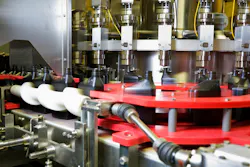
With so much focus on AI data analytics in manufacturing, ranging for executive dashboards to predictive maintenance, you may not be aware of how extensive the reach of AI into industry has become. Various kinds of AI are already at work enhancing motion control through data analysis, machine learning and edge computing applications.
These AI models and algorithms analyze vast amounts of data from sensors, not only to optimize the position, speed and energy consumption of motors, drives and actuators, but also to predict faults and adapt to changing circumstances.
“AI-driven motion-control systems are popping up all over the map,” said Eric Halvorson (EH), senior marketing technology manager of automation and control at DigiKey. “For example, we see AI-driven motion-control in welding shops, where AI is being used to control robotics in welding operations.” Here, AI improves the consistency and integrity of welds by adapting the motion to accommodate even the smallest of variations in the workpiece and process.
AI is also augmenting motion control in the manufacture of bodies in white (BIWs) in the automotive industry.
“Edge analytics on servo press lines and BIW gantries detect misalignment and bearing wear early from drive current and vibration measurements to prevent unplanned stops. In addition, reinforcement-trained profilers reduce the settling time on long-stroke axes,” explained Annemarie Breu (AB), senior director of automation software deployment and incubation at Siemens Digital Industries.
Machine learning paired with condition monitoring can provide insight into the health of a machine and support the automation of corrective measures to its operation. “Continuous monitoring of temperatures at specified application speeds allows you to adhere to the manufacturer’s recommendations to avoid overheating,” noted Matt Prellwitz (MP), drive technology product manager at Beckhoff USA. “Even throughput data can be used here.”
Following are key highlights from our discussion about AI in motion control with these experts.

AW: How does AI improve the precision and efficiency of motion control systems?
AB: AI augments classical control, such as cascaded PID, feed-forward and jerk-limited profiles with data-driven adaptation. It continuously learns the changing dynamics of such metrics as load, friction, vibration, temperature and tool wear within machinery. It can then use this information to detect anomalies early and to optimize motion profiles on the fly to tighten control at higher speeds and lower energy. Models run alongside a servo loop to compensate for disturbances and to reshape profiles while respecting drive limits and safety envelopes. Drive and sensor telemetry also lay the groundwork for predictive maintenance and early detection of problems.
As values drift from normal, AI can adapt feed-forward and filters to hold tolerances longer, buying some time to schedule maintenance. It can also smooth jerk and torque and optimize cam profiles to reduce shock loading and extend the life of components in the system.
AW: What are the key components required for AI-driven motion control and how do they work together?
AB: The core building blocks are: sensors, such as encoders, inertial measurement units (IMUs) and thermistors that measure force, torque, temperature, current and other time-synced data; actuators, such as servomotors and drives and pneumatics with control telegrams (structured data packets that transmit control information between devices in automation systems) and diagnostics; motion controllers, which run safety systems and execute deterministic, low-level loops such as position, velocity and torque; and AI modules at the edge used in routines in industrial PCs or in computers embedded in drives that run inference estimation.
MP: Sensors are the devices that do the actual monitoring. In a servomotor, for example, they track conditions that cause failures, like shock, vibration, temperature and humidity. Sensors can be built into the motor, and analytics tools in the automation software can be used to interpret the data and act accordingly. The software is the most critical piece here where vendors can add supplements for AI, machine learning and analytics.
Although there are many ways to add AI and machine learning to machines deployed over the last 30 years, you must still decide whether a retrofit or a new system would be a better solution and then justify the cost.

AW: Can AI be added to legacy motion control systems?
EH: In most cases, AI can be added, but it requires a good deal of retrofitting and careful planning. The right sensors are key. Sensors today are light-years beyond where they were when most legacy systems were created. Their speed, accuracy, communication capabilities and even replaceability have opened the door for incorporating AI into most brownfield applications. I/O technologies like IO-Link make it easy to retrofit advanced sensors into nearly any application, especially in predictive maintenance.
AB: Retrofits typically occur in three phases. First to collect the desired data. Here, adding edge gateways to existing PLCs and drives allows streaming of data related to drive currents, speed, alarms, temperature and vibration. This requires minimal changes, if any, to existing control logic. The second phase is to implement AI as a non-interfering observer that runs anomaly detection and predictive models either at the edge or in the cloud. Here, the system generates recommendations, such as “bearing wear on Axis 3 likely in three weeks, reduce acceleration to X.” Operators, however, still adjust parameters either manually or via recipes. The third phase is to integrate AI into supervisory control. Where permitted, AI makes bounded tweaks to parameters or high-level setpoints in the legacy controller to update friction tables or tweak acceleration or jerk in a recipe. Low-level loops remain in the controller for determinism and safety.
Technologies like IO-Link make it easy to retrofit advanced sensors into nearly any application, especially in predictive maintenance.

MP: Although there are many ways to add AI and machine learning to machines deployed over the last 30 years, you must still decide whether a retrofit or a new system would be a better solution and then justify the cost. Advances in the latest technology offer more integrated solutions for all aspects of machine control, but a five-year-old machine with sensors and connections into an older system can still retrieve data. Sensors like accelerometers, RTDs (resistance temperature detectors) and thermocouples can be added at low cost in a retrofit to retrieve more data, and there are new software tools for analyzing this data.
AW: How does AI affect the reliability and maintenance of motion-control systems?
EH: AI can affect reliability and maintenance in a very positive way. Using trends and patterns in historical data, AI can recognize where peaks and valleys in production data are, use data points from the sensor network to see how a machine is currently operating and project a trendline into the future to predict failure. With these predictions, you can schedule maintenance to minimize downtime and the effect of deviations.
AB: As values drift from normal, AI can adapt feed-forward and filters to hold tolerances longer, buying some time to schedule maintenance. It can also smooth jerk and torque and optimize cam profiles to reduce shock loading and extend the life of components in the system. In addition, AI software can correlate alarms, waveforms and past fixes to suggest likely root causes and recommend corrective action.
AW: How can users calculate the return on investment for AI-enhanced motion control?
EH: First, determine the amount of wasted energy, materials, resources and downtime that occur with your legacy motion control. Then, forecast those expenditures over the course of 5, 10 and 20 years. Next, compare those figures to the initial cost of AI. Now, figure in increases in productivity and reductions in waste and energy. And consider the equipment you didn’t have to replace because you found problems in advance, fixed them while the cost was still low and got the equipment back into service. Finally, add in scalability. You can grow production and increase efficiency by scaling up with the help of AI systems.
AB: Manufacturers can also use a before-and-after model to show both direct savings and the effects of greater yields.
More motion control insights from Automation World:
About the Author
 James R. Koelsch, contributing writer
James R. Koelsch, contributing writer
Contributing Editor
 Leaders Logo
Leaders relevant to this article: