Predictive Maintenance Pays For Itself
Key Highlights
- Predictive maintenance is replacing schedule-based and route-based maintenance by using continuous asset monitoring to detect problems earlier, reduce downtime and avoid unnecessary maintenance.
-
The real value comes from software that combines machine learning, AI and failure analysis.
-
Successful adoption starts with small pilot projects.

Maintenance and reliability capabilities have come a long way. Historically, reliability teams primarily followed schedule-based maintenance strategies. This typically meant following manufacturer-recommended guidelines for asset maintenance, performing overhauls on equipment at a regular cadence whether each asset needed maintenance desperately, or not at all.
As technology improved, teams began moving toward more informed preventive maintenance. Route-based vibration data collection with handheld sensors, typically performed every 30-90 days, gave reliability personnel improved insight into asset health, a major improvement over schedule-based maintenance.
Today, predictive maintenance enabled by continuous online asset monitoring represents the next leap forward in reliability strategy. With more data, teams have the potential to intervene in the earliest stages of asset degradation, helping avoid over- or under-maintained equipment and increasing uptime.
However, bringing in more data does not automatically translate to increased value because reliability teams need actionable workflows to truly improve their performance. Predictive maintenance is about more than new technology and increased data collection; it is an evolution in how decisions are made.
Continuous monitoring changes everything
Modern sensors are more affordable and more powerful than ever. Online monitoring has the capability to deliver richer, more frequent data, along with earlier indicators of failure. This can make it tempting to follow a “Buy the cheapest sensors and stick them on everything” approach to data collection, but that temptation is typically a trap. Without defined workflows, continuous data quickly becomes noise. Operators and technicians are flooded with alerts, alarms, and other data that they simply do not have the time or expertise to decipher.
Predictive maintenance requires knowing when to act and how close to failure the organization is willing to operate. Reliability teams must balance minimizing maintenance spending alongside preserving enough safety margin to avoid unplanned downtime. Raw data alone cannot accomplish that goal, and few organizations have the deep bench of experts to analyze this data on a regular basis.
Software enables predictive decisions—not just alerts
To turn raw data into actionable information, today’s most successful reliability teams are turning to machinery health software. At both the plant and enterprise level, machinery-health software applies machine learning (ML) and pattern recognition to identify what is happening and what action is required.

Instead of raw spectrum and waveform data, teams using machinery-health software receive clear, intuitive guidance. Modern software applies built-in ML and failure mode and effects analysis (FMEA) to provide a clear asset health score in green, yellow or red, indicating the severity of the asset’s condition. With a few clicks, a technician can drill down into the health status of an asset and see the suspected cause, as well as guidance for remediation.
The most advanced software also includes industrial artificial intelligence (AI) to further customize guidance. Teams can leverage AI and FMEA to move beyond simple anomaly detection, potentially detecting failure patterns up to 90 days in advance. As teams employ these technologies, predictive maintenance becomes a decision support system.
Organizational ownership is key
Condition monitoring hardware and software empower teams to dramatically improve their reliability performance, but only if they are supported. A key indicator of success for any reliability program is whether it has an organizational champion. Like any program, reliability projects take time, energy and effort.
Most successful programs begin with a committed internal champion. A champion does not have to be an expert in modern reliability technologies. Rather, the champion is someone who understands the potential of predictive maintenance and is willing to work closely with pilot projects to help translate that potential into demonstrable wins for the organization.
For example, at one large U.S. refinery, a frontline maintenance manager helped deploy predictive-maintenance sensors and software across individual areas where the plant had experienced repeated failures. A technician closely monitored the pilots, identified and quantified early wins, and communicated the results to leadership. The team turned small technology investments into visible, defensible return on investment (ROI), and, ultimately, into a predictive-maintenance program that the organization scaled across multiple plants.
Building buy-in without overcommitment
For reliability teams and organizations just beginning their predictive-maintenance journey, project and pilot scale matter. Teams need to start small, but not trivial. If teams over-instrument, they run the risk of being flooded with data, making it hard to generate actionable insights. Starting too small, or with the wrong assets, however, can lead to disappointing results.
A few wireless vibration monitors or asset monitors are an accessible starting point for any team evaluating predictive maintenance. By choosing quality sensors—such as those that use onboard ML and edge analytics to cut through the complexity of raw data—and applying those technologies to known problem assets, teams can capture early successes.
Beyond simply capturing those early wins, teams must also be sure to document them and translate them into business outcomes. Leadership must see why scaling makes sense before they fund site-wide deployments. Whether it is failure and downtime avoidance, reduced energy spending, reduction in spare parts depot costs, and/or other factors—predictive maintenance is easier to justify when ROI grows in parallel with scope.
Predictive maintenance in practice
So, what does this strategy look like in action? Many teams start with a single process unit. Within that process unit, they can focus on known problem assets, such as compressors that fail too frequently. The team can create a small budget and instrument just those bad actors to compare predictive technologies against traditional maintenance strategies (Figure 2).

As the team works with a small group of assets, they learn critical skills: sensor placement, data interpretation, and enhanced workflows, and they can continue to refine those skills to ensure they generate the right outcomes. Once they do and the value is clear, the team can expand to other assets in the same unit. Fans, blowers, and other rotating equipment can all be rolled in.
As the unit succeeds, the question naturally shifts from, “Does it work?” to “Why wouldn’t we scale it?”
Early integration enables scalability
One of the greatest challenges of adding new reliability technologies is the risk of creating additional data silos. If intelligent sensing devices and machinery-health software are collecting data in different storage areas using different formats, teams can quickly become discouraged by the complex custom engineering necessary to get contextualized data out of those solutions and into the hands of the people who need to use it. Moreover, it becomes increasingly difficult to generate buy-in among personnel with each new technology they must learn and master to perform their jobs effectively.
As a result, many reliability teams are opting for predictive-maintenance technologies designed as part of an enterprise operations platform (EOP) built on a seamless data fabric for intuitive integration. Modern EOP solutions are part of a software model designed to scale easily so that teams can move from 50 points to 1,000 points to thousands more, all without the need for painful migrations at each stage (Figure 3).
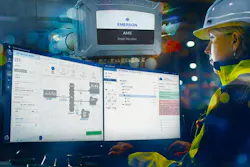
Moreover, because the solutions are all part of the same EOP ecosystem, the look and feel of each element is familiar across the software. Teams can learn the system incrementally, and each new addition feels like a logical extension of the skills they already have.
An EOP solution also helps teams connect predictive maintenance to a long-term digital strategy. With the seamless data mobility provided by an integrated data fabric, it is easy for teams to build comprehensive, centralized dashboards that break down silos between teams and sites. This not only helps teams more effectively communicate and collaborate, it also unlocks the ability to drive larger maintenance initiatives from a centralized location. This approach empowers organizations to let their best personnel provide expert support over a wider area, ultimately doing more with less.
Locking in seamless data mobility from the earliest stages helps ensure increased value across the lifecycle of an organization’s investment. In many cases, organizations expect the technologies a team adds as part of a modernization strategy today to still be used in another 10 or 20 years. Ensuring these technologies can be easily integrated with current solutions and are developed with a long-term strategy for supporting the solutions that will emerge in coming years should be a priority from the very beginning.
The future is AI, and it needs predictive technologies
Today, AI is increasingly handling vibration analysis and signal interpretation. Every day, new solutions are released with on-board AI models to help make sense of incoming data. These solutions are starting to become a basic expectation to compete in an increasingly competitive marketplace.
Future systems will raise expectations even higher. Automation suppliers are already developing systems with natural-language interaction to help less experienced users troubleshoot with confidence. These AI advisors will soon help operators and technicians make better decisions based on the unique features and configuration of their plants.
Beyond those capabilities just over the horizon are additional AI features that are currently unimagined. Yet, at the heart of all of them is quality, contextualized data—the kind of data modern predictive-maintenance technologies can provide. Ultimately, the predictive-maintenance programs built today are laying the data foundation for the AI-driven future.
Predictive maintenance is a journey and the time to start is now
Route-based maintenance was a tremendous improvement over traditional reliability strategy, but today, it is no longer enough. Predictive maintenance is the next evolution of reliability, and it relies on continuous data paired with effective workflows and personnel.
Starting small with predictive-maintenance pilots, proving ROI, and scaling intelligently makes adoption of these technologies achievable for organizations of any size. Today is the day to begin building predictive capability and locking in competitive advantage.
About the Author
 Ben Swisher
Ben Swisher
Emerson
Ben Swisher serves as the general manager for Emerson’s Reliability Solutions business.
 Leaders Logo
Leaders relevant to this article: