IFS and Anthropic Bring AI-Powered Predictive Maintenance to Industrial Frontline Workers
IFS Nexus Black and Anthropic have entered a partnership to accelerate and scale the impact of AI in critical industries across the manufacturing and energy industries, among others. The partnership will combine the industry and AI expertise of IFS Nexus Black with Anthropic's AI capabilities.
The IFS Nexus Black business of IFS, a supplier of agentic AI-powered automated workflow software, allows customers to access new software capabilities and enage in their creation via bespoke deployments. IFS Nexus Black said its business offering enables companies to gain fast-mover advantage and influence software development at IFS.
Initial use cases being focused on by IFS Nexus Black include predictive maintenance, manufacturing scheduling and intelligent automation.
A key facet of this partnership revolves around the launch of Resolve, IFS software developed to put industry-specific AI into the hands of frontline workers.
According to IFS, Resolve's capabilities reflect “the stark realities facing technicians and field workers.” Resolve uses Anthropic’s Claude AI to predict and prevent what humans might miss by analyzing thousands of equipment images, correlating sensor readings, and connecting patterns across visual inspections and operational data to catch problems before they become failures.
IFS and Anthropic note that industrial workers are “underserved by generic and consumer-grade AI geared towards white collar workers and unsuited to asset and service-centric operations. Scalable, high-impact AI solutions designed for industrial applications are urgently needed.”
Kriti Sharma, CEO at IFS Nexus Black, said, "These hardcore industries are where the real AI revolution is happening. It's not the AI of tabloid headlines. It's the lifeline for the workers that keep the lights on, the cupboards stocked and the world turning."
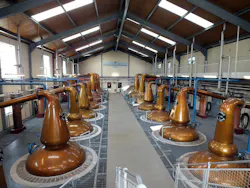
William Grant & Sons, the distiller behind Grant's whisky and Hendrick's gin, has been using Resolve to cut downtime and overhaul operations. Before its use of Resolve, the distiller’s fragmented operations data meant that 38% of repairs carried out by engineers were conducted due to emergencies, rather than being proactive. This often led to costly downtime incidents.
Now, Resolve reads complex plant schematics, plugs into existing sensors to predict failure before it happens and diagnoses faults based on what engineers need to know to prevent failures. Technicians can use Resolve to diagnose faults based on the sound of a rattling pipe, video showing a part moving strangely or fluctuations in pressure.
Since it began using Resolve, the distillery has slashed downtime and boosted output. The team estimates these changes will save £8.4 million annually.