Use of Predictive AI in the Oil & Gas Industry Offers Lessons for Manufacturers
Key Highlights
- Honeywell’s HALO machine learning system predicted pressure disturbances and cycle delays with 12-minute notice, enabling operators to take preventive action before shutdowns occurred.
- The collaborative approach between process experts, frontline operators and technology teams ensured AI insights matched real-world operational needs, resulting in tools that operators trusted and used.
- Initial results identified clear pathways for improvement, such as extending prediction windows, incorporating external variables like weather patterns and expanding models to additional process areas. This demonstrates that AI value grows as models are refined with operational experience and contextual data.
This challenge will sound familiar to many plant managers in every industry vertical: equipment failures causing unplanned downtime, operators struggling with information overload and insufficient time to prevent costly shutdowns in response to alarms or other system notifications of trouble.
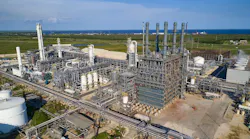
For TotalEnergies’ Port Arthur refinery, these issues were faced in its delayed coker unit processing heavy oils. However, the underlying problems TotalEnergies encountered mirror those in pharmaceutical batch processing, automotive assembly, food and beverage production, and other manufacturing operations where process stability and equipment reliability are critical.
The operational challenge
The refinery's delayed coker unit — a complex thermal processing system — struggled with multiple issues that disrupted production. Power fluctuations affected steam generation, pressure disturbances triggered compressor failures and operators lacked advance warning to take preventive action before equipment trips forced shutdowns.
These disruptions led to excessive emissions, regulatory penalties, higher operating costs and safety concerns.
Sound familiar? It should, because manufacturers dealing with batch consistency issues, line stoppages or quality problems face similar challenges, even if the specific equipment differs.
The AI answer
TotalEnergies worked with Honeywell to deploy Honeywell’s HALO (Highly Augmented Lookahead Operations) Operator Advisor, a machine learning platform that analyzes data from distributed control systems and delivers predictive insights through operator dashboards.
The implementation focused on three critical prediction scenarios that translate well to manufacturing contexts:
Equipment failure prevention. The system successfully predicted five pressure disturbance events, providing operators with an average 12-minute advance warning. This lead time enabled proactive load shedding of non-critical processes, preventing compressor shutdowns and maintaining continuous operations. For manufacturers, similar predictive capabilities could forecast bearing failures, hydraulic pressure drops or thermal excursions before they trigger line stoppages.
Having operators and supervisors participate in the project from the start helped ensure the AI insights matched real-world operational needs rather than providing theoretical possibilities.
Cycle management optimization. At the refinery, the HALO system monitored processing drum cycles — vessels that are filled, cleaned and refilled in recurring patterns. Since cycle rates vary with multiple process variables, operators needed reliable status updates and early warnings when cycles fell out of sync. HALO’s hourly modeling provided cycle status across 24-hour operations, alerting supervisors to delays or synchronization issues. Batch manufacturers managing reactors, fermentation vessels or thermal processing equipment face similar cycle management challenges.
Process event prediction. The HALO technology accurately predicted a manual intervention event where coke buildup required steam blasting, allowing supervisors to coordinate operator availability and resources without impacting production schedules. This mirrors the predictive maintenance needs in manufacturing for planned interventions like changeovers, cleaning validations or equipment inspections.
Addressing information overload
Beyond HALO’s predictive analytics, the TotalEnergies’ project implemented Honeywell’s Enhanced Alarm Decision Support (EADS) to help operators manage control room complexity. The system uses historical alarm data and process diagrams to guide operators through unfamiliar situations, essentially capturing institutional knowledge in accessible digital format. For newer operators, this proved invaluable. Rather than relying solely on experienced colleagues during emergencies, operators could access proven response actions based on previous similar events.

This capability addresses a critical challenge as manufacturing facilities cope with workforce retirements and knowledge transfer.
Keys to production analytics success
According to Frederic Robert, instrumentation integrated control and safety systems and analyzer senior engineer at TotalEnergies, the project succeeded because it combined deep process expertise with advanced technology capabilities. He noted that having operators and supervisors participate in the project from the start helped ensure the AI insights matched real-world operational needs rather than providing theoretical possibilities.
This collaborative approach delivered practical, usable tools that operators actually trusted and used, which can be a common stumbling block for AI implementations that are developed without sufficient frontline input.
Continuous improvement opportunities
The TotalEnergies team identified several enhancement pathways based on its initial results using HALO and EADS:
- Extending prediction windows from 12 minutes to 15-25 minutes for greater response flexibility.
- Incorporating external variables like weather patterns, which can affect process stability.
- Adding contextual factors such as equipment failures in connected units or ongoing maintenance activities.
- Expanding successful models to additional process areas for broader operational value.
The system successfully predicted five pressure disturbance events, providing operators with an average 12-minute advance warning. This lead time enabled proactive load shedding of non-critical processes, preventing compressor shutdowns and maintaining continuous operations.
These iterative improvements demonstrate an important principle for industry’s use of AI technologies: AI deployment is not a one-time implementation but an ongoing optimization process that grows more valuable as models are refined with operational experience.
Applying these TotalEnergies’ lessons to your operations
Manufacturers in discrete and batch production environments can draw several practical lessons from this oil and gas implementation:
Start with specific pain points. Rather than broad AI initiatives, focus on concrete operational challenges, such as equipment failures, batch inconsistencies or cycle synchronization issues where predictive warnings have clear value.
Involve operators early. Frontline personnel understand which predictions would be actionable and which warnings might be ignored. Their input shapes tools that will be used rather than bypassed.
Leverage existing control system data. The HALO implementation drew from existing distributed control systems. Like the Port Arthur refinery, most manufacturers already have sufficient data infrastructure to support predictive AI analytics.
Focus on lead time. The 12-minute advance warning for pressure disturbances proved sufficient for preventive action. Determine what prediction windows would allow your operators to take meaningful corrective steps, then target AI models to deliver within those time frames.
Capture institutional knowledge digitally. As experienced operators retire, alarm guidance systems and decision support tools preserve proven response strategies that might otherwise be lost.
Plan for iterative improvement. Initial AI models provide value but require refinement based on operational experience, additional variables and changing process conditions.
About the Author
 David Greenfield