Beyond the Dashboard: How Visual Intelligence Is Reshaping Chemical Operations
Key Highlights
- Industrial plants lose critical operational knowledge when human observations delivered via shift notes, verbal handovers or maintenance logs remain siloed from process data systems like DCS and SCADA.
- Intelligent operations platforms address this by unifying sensor data, equipment status and operator insights into role-specific dashboards.
- AI within these platforms goes beyond visualization to analyze both structured and unstructured data to surface root causes, recommend proven corrective actions and deliver historical context in seconds.
Here’s a common chemical plant scenario: A night shift operator notices unusual vibration in compressor 3B. It's nothing that trips an alarm but it’s noticeable enough to mention in the shift log.
The day shift supervisor scans these handwritten notes during morning rounds but doesn't flag it for immediate action. Two weeks later, the compressor fails during peak production, triggering an unplanned shutdown that costs the plant in lost production and emergency repairs.
This wasn't a failure of diligence or expertise. It was a failure of visibility.
Chemical plants run on continuous processes managed by sophisticated control systems: distributed control systems (DCS), supervisory control and data acquisition (SCADA) and historians that capture thousands of process variables every second. Critical information that often matters most, such as a subtle observation or a recurring anomaly or the context that explains why a deviation happened is often contained in shift notes, maintenance logs and verbal handovers.
When that knowledge stays trapped in silos, even the most capable teams are flying blind.
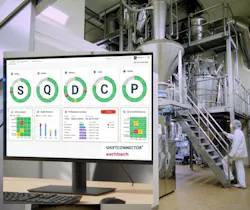
Amid all the ongoing discussions about industrial data, it’s clear that what industry needs most is visual intelligence powered by an intelligent operations platform (IOP) that unifies operational data, contextual insights and human observations into a single, intuitive view. By connecting roles, shifts, and systems, an IOP ensures that critical signals are never lost and decisions are made with full visibility.
From awareness to action
Visual intelligence is not just about adding more dashboards or screens. It is a fundamental shift in how operations teams access, interpret and act on information. Intelligent dashboards make data actionable, so when a critical warning appears, teams can respond immediately.
When a pump shows unusual vibration, for instance, AI can find historical cases with similar signatures, show which corrective actions worked and help reliability engineers plan proactive maintenance.
In many plants today, information often flows through spreadsheets, emails, phone calls and verbal updates, leaving room for miscommunication. Visual intelligence replaces this fragmented approach with a unified, real-time view that keeps everyone aligned.
At its core, visual intelligence rests on three principles:
- Unified data integration breaks down silos between process data and human knowledge. Instead of toggling between DCS, maintenance systems and handwritten logs, teams see sensor readings, equipment status and operator observations in one place and whether there are any quality deviations or critical operational anomaly.
- Role-specific visualization ensures each team member, whether on the plant floor, in engineering or in management, sees what matters most for their decisions while working from the same single source of truth.
- Dashboards create a shared workspace where teams coordinate tasks, streamline handovers, stay aligned on key performance indicators and make faster decisions that help prevent issues before they escalate.
An IOP brings these principles to life, combining visualization with AI to explain why issues occur and suggest what to do next. The results are faster decisions, fewer surprises and safer, more efficient operations.
The role of AI in IOPs
Visualization shows what’s happening on the plant floor. Artificial intelligence explains why it’s happening and suggests what to do next. An IOP brings these capabilities together to give plants the clarity and context they need.
Experienced operators develop intuition for these relationships over years, but even the best teams can miss subtle connections, especially when reviewing data across multiple shifts, units or sites.
In complex chemical operations, for example, patterns aren't always obvious. A reactor temperature spike might be caused by a fouled heat exchanger, a change in feedstock composition, an upstream process upset or a failing control valve. Experienced operators develop intuition for these relationships over years, but even the best teams can miss subtle connections, especially when reviewing data across multiple shifts, units or sites.
AI excels at this kind of pattern recognition. By analyzing structured data from historians alongside unstructured information from shift notes and maintenance logs, it can surface likely root causes that might otherwise take hours or days to identify. Today’s AI lets teams query operational history in plain language—for example: Show me similar temperature excursions in Reactor 2—and get relevant context in seconds rather than digging through multiple systems.
AI can also recommend solutions based on past interventions. When a pump shows unusual vibration, for instance, AI can find historical cases with similar signatures, show which corrective actions worked and help reliability engineers plan proactive maintenance. By weighing safety risk, production impact and compliance implications, it helps teams focus on what matters most. And all this data is delivered in seconds.
Critical information that often matters most, such as a subtle observation or a recurring anomaly or the context that explains why a deviation happened is often contained in shift notes, maintenance logs and verbal handovers. When that knowledge stays trapped in silos, even the most capable teams are flying blind.
It’s important to note that AI’s role in IOPs is to augment human expertise, not replace it. Operators and engineers still make the final call, but with faster access to context and the collective knowledge of past shifts, they have the data to make speedier decisions.
IOP implementation essentials
Visual intelligence requires more than installing new software. It demands foundational work that many manufacturers have put off for years, such as:
- Start with data infrastructure. You can’t visualize information you can’t access. Integrate data across systems—DCS, SCADA, MES, maintenance and lab systems—starting with the sources tied to your biggest operational pain points, such as equipment reliability or quality variability.
- Standardize the basics. Visual intelligence only works when everyone uses the same definitions and workflows. Establish common KPIs, consistent event-logging practices and clear escalation protocols so teams aren’t operating from fragmented or conflicting information.
- Configure for context. Dashboards must reflect site-specific processes, terminology and risk profiles. Involving operations teams early ensures visualizations support real decisions rather than simply mirroring available data.
- Train for adoption. Technology doesn’t drive change on its own. Teams need practical training on how and when to use visual tools, reinforced through routines like shift handovers, daily tier meetings and AI-supported root-cause reviews.
More process operations insights from Automation World:
About the Author
 Andreas Eschbach
Andreas Eschbach
Andreas Eschbach is founder and CEO of eschbach.