Robotiq Announced AI-Enabled Platform for Workcell Integration
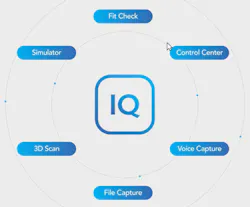
Robotiq announced IQ, an AI-enabled platform designed to make robotic workcell integration more scalable in a shift from a manual approach to automatic integration through data capture, project coordination and design.
The platform captures unstructured automation-project data, coordinates engineering workflows and helps partners generate validated workcell designs based on customer inputs and historical deployment data from thousands of previous factory installations, according to Robotiq.
“Automation does not scale when integration remains manual,” said Samuel Bouchard, CEO of Robotiq. “With IQ, we are moving from manually engineering robotic systems one project at a time to automatically generating workcells from real customer inputs, Robotiq components, AI, and proven know-how from thousands of past projects. For manufacturers, this means a clearer path to automation: fewer surprises, faster decisions, more predictable performance, and better financial justification, including in many one-shift operations.”
With IQ, system integrators and manufacturing partners leverage the following capabilities, according to the company:
- Automated data capture: Extract technical requirements via voice notes, legacy file uploads, and 3D-site scanning.
- AI-enabled project coordination: Machine-learning models align manufacturer specifications, partner capabilities, and Robotiq application-engineering expertise.
- Simulation and design validation: 3D-environment scans are converted into digital twin models, matching customer cycle times and application data against standardized engineering rules to validate workcell performance before physical deployment.
IQ is available for robotic palletizing applications, where Robotiq has already standardized the hardware components, software workflows, and deployment knowledge needed to generate validated Workcell designs. Over time, Robotiq plans to extend the same automatic integration model to additional robotic applications, the company said.
IQ also provides partners with a repeatable digital workflow to capture project information and support workcells more consistently after installation, according to Robotiq.
“IQ does not replace partner expertise,” Bouchard said. “It amplifies this expertise to accelerate and scale projects. Manufacturers need local partners who understand their production reality and can provide the installation capacity and support needed to keep lines running. IQ gives those partners better information, better coordination, and a clearer path from opportunity to running system.”
More artificial intelligence insights from Automation World:
Robotics Developers Focus on AI Software to Address Performance, Study Finds
Automation World Q&A: How Physical AI Is Making Supply Chains Come To Life
Physical AI Company Announces Expansion in Global Markets with Platform