Actuators in Lab Automation Evolve from Tabletop Devices to Large-Scale Systems
Key Highlights
- Pandemic demand accelerated actuator sales as labs automated mass testing of thousands of patient cultures requiring rapid results.
- Biohazard concerns have created a market for simplified, single-use throwaway actuators in applications like biopsy processing to prevent cross-contamination.
- Modern medical machines now require actuators with 2- to 3-meter strokes supporting payloads of hundreds of kilograms, far beyond earlier gram-scale sample handling.
What are the typical applications for actuators within the medical and lab automation sectors?
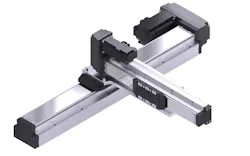
Medical testing and processing of patient cultures and samples are the most common applications of actuators we see. Looking at this on a larger scale, we’re seeing medical testing machines with trays of blood samples loaded for processing via conveyor systems in test tubes that can test for multiple results simultaneously. This has driven the need for cartesian robots using individual X, Y and Z coordinate actuators to pick and place samples into multiple cells of a machine for different tests all at once. This process can scale by building larger machines with more cells requiring a transport axis for six-axis robots to move horizontally and vertically. With this evolution of the industry, the main focus is no longer primarily on small medical testing devices with the footprint of a laptop computer, but with the upscaling of machines large enough to walk into with actuators that have 2- or 3-meter strokes.
How have actuators evolved for the medical industries?
We’ve seen the need to grow for small individual testing units as well as mass-scale processing and simultaneous processing. This is what’s driving the need for longer strokes and much higher payload requirements. Additionally, we’ve seen an uptick in requirements on the front end of medicine for automated manufacturing of simple items that might be in a doctor’s office, hospital or veterinary clinic. Since a lot of the automation within the medical and lab automation sectors deals with biohazardous materials, the smaller medical testing units can have single-use requirements. Due to cross-contamination concerns such as actuators used in biopsy processing, the actuators have become more simplified and don’t require as high of a degree of engineering as general automation, thereby turning actuators into single-use, throwaway units. This simplification has driven portions of the market into simple, low-cost actuators lacking options because they must be replaced frequently.
Do you see other automation aspects evolving in parallel with this evolution of actuators?
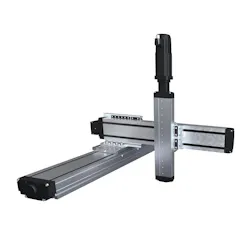
As the industry has grown through the years, the need for automation has increased dramatically, not necessarily to save on operating costs, as is common in industrial automation applications, but to speed up processes and remove the potential for human error. The recent global pandemic is a good example, when widespread testing was required of patient cultures to determine a positive or negative result. Before at-home testing was developed, cultures were sent to independent labs for testing, which could have upwards of thousands of cultures that patients and doctors needed results from as soon as possible. As a result, the market witnessed a boom in actuator sales during this time because labs couldn’t get enough actuator assemblies to automate mass testing. Post-pandemic, the need for increased automation remains for a variety of needs, including culture testing and biopsy processing, which requires two-axes tables composed of individual actuators to quickly and accurately test cultures or precisely slice a thin enough sample of biopsy tissue for microscopic viewing.
What are some of the biggest needs you’re seeing from medical device customers that have driven the evolution of actuators?
As I noted earlier, upscaling and mass processing have driven the more recent needs out of the medical and lab automation industries. Additionally, an actuator may not be supporting a sample or tool carrying a sample weighing grams but supporting masses of other actuators and robots, plus their handling and dispensing tools weighing tens and possibly hundreds of kilograms. So, the need has grown for much larger actuators going into machines and not just tabletop testing devices.
How should OEMs and end users view actuators’ roles in larger systems and the overall manufacturing process?
Within the medical and lab automation sector, the end user is often also an OEM. Within medical science and development, like any industry, the first to the market with a unique solution is typically the winner. Actuators offer a pre-engineered solution that eliminates the need for overly complex designs using components that require external integration and valuable resources to develop.
About the Author
 Justin Lackey
Justin Lackey
Justin Lackey is senior sales engineer at Bosch Rexroth.
 Leaders Logo
Leaders relevant to this article: