Smart Motion Control Upgrade Strategies to Avoid Costly Replacements
Key Highlights
- Nearly 50% of manufacturers cite installation expenses and operational disruption as key factors when deciding between upgrading, retrofitting or replacing drive systems.
- Open platforms and edge-based gateways allow legacy equipment to connect with modern IIoT capabilities without disrupting existing systems.
- Companies are embedding sensors and analytics into older drives to monitor bearing wear, temperature and vibration, enabling proactive maintenance in previously unmonitorable environments.
Complex integration challenges associated with melding traditional drives and motion control systems with modern Industry 4.0 technologies stands as one of the biggest obstacles to smart manufacturing for many companies. Though many manufacturers are eager to capitalize on Industry 4.0 promises of greater flexibility, energy efficiency and performance gains, the transition can be stymied by the need for an upgrade path that effectively transforms legacy industrial assets into active participants in an intelligent manufacturing landscape.
The transition is complicated by the fact that some legacy drives or motion control assets are simply not viable candidates for this kind of retrofit. And for those assets that are suitable for this transition, syncing them to open standards-based industrial networks can open a hornet’s nest of security concerns that must be addressed for a safe transition.
This leaves many manufacturers to navigate a gray zone around what makes the most economic and business sense to enable a plant or industrial operation to tap into technologies like AI and IIoT for remote diagnostics and predictive maintenance or simply to improve visibility into performance, safety and quality.
Without a common playbook for transformation, manufacturers must evaluate several factors when determining whether to shoulder the cost and potential downtime of a full drive or motion control system replacement or invest in upgrade solutions that revitalize legacy equipment. Research from ABB found upfront investment costs and expected downtime during installation were the primary considerations when deciding between upgrading, retrofitting or replacing equipment, cited by nearly 50% of respondents.
An architecture that supports plug-and-play design allows you to swap out for more modern capabilities, whether that’s an operating system, communications protocol or a bigger processor with more memory.
ABB’s research found companies were most motivated to undertake drive and motor modernization projects to improve performance and reliability (according to 48% of respondents), reduce energy consumption or operating costs (40%), and enable new capabilities such as condition monitoring (34%).
“The decision to upgrade or replace [drives and motion control systems] is highly dependent on the specific circumstances of each installation,” said Oswald Deuchar, global head of the modernization program for ABB Motion Services. “We must consider the age, condition and maintenance history of the drive. If its core components are in good condition, then upgrading represents a cost-efficient and sustainable option.”
The state of existing infrastructure serves as another driving factor. “An upgrade might be the better option if substantial changes are required to implement a new drive, such as new cabling, foundations, floor reinforcements and air conditioning,” Deuchar added.
Conversely, complete replacement becomes the preferred option when legacy systems can no longer meet the required performance, safety or integration standards, said Marc Konrad, head of global customer services for motion control, at Siemens. “Manufacturers should assess the structural condition of existing equipment, the availability of spare parts, and the compatibility with modern digitalization and cybersecurity requirements,” he explained.
The open platform approach
The ongoing shift to an open industrial landscape, including evolving open standards for communications, networking and enterprise application integration, is helping manufacturers gradually merge legacy drive and motion control equipment into the emerging Industry 4.0 world order.
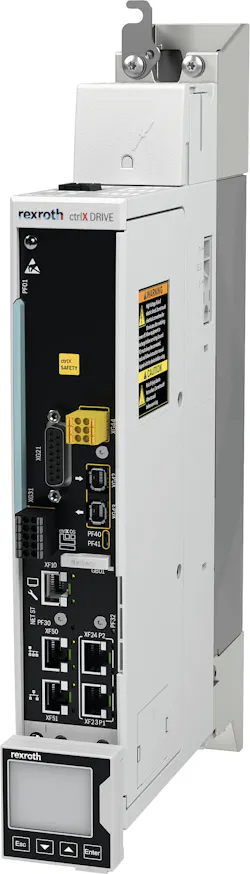
Bosch Rexroth is focusing on this approach with its ctrlX Automation open automation toolkit, which lies at the heart of the firm’s legacy asset integration strategy. ctrlX Automation encompasses all the building blocks for complete automation systems, from motion control and modern IIoT software to ctrlX Drive — modular drive portfolio that ensures machines can be flexibly adapted to new requirements without having to completely change existing structures. The ctrlX Core industrial control system also serves as a bridge for connecting legacy equipment with newer functionality.
Joaquin Ocampo, product manager at Bosch Rexroth, said he sees manufacturers in the food and beverage and textile industries tapping ctrlX Automation applications to integrate sensors and data analytics with existing drive and motion control systems. “With ctrlX Core, they have a variety of apps to choose from to connect to multiple devices, including the MQTT communications protocol,” he explained.
And working with the IT department to integrate firewall requirements and VPN connectivity, these customers are also able to leverage ctrlX Core as a secure gateway for remote connectivity to specific assets without necessitating changes to the base motion control system, he added. “A clear benefit [with this approach] is that they don’t disrupt or have to change the existing system, yet they can have all the additional data collection capabilities to help with OEE (overall equipment effectiveness), quality and remote troubleshooting,” Ocampo said.
If existing assets lack processing power or memory required for modern communications, adding intelligence at the edge through devices or gateways can extend connectivity, enable local data processing and integrate legacy assets into modern digital architectures.
Updating core motion control technologies for modernization
ABB has partnered with Samotics to embed its Electrical Signature Analysis (ESA) technology into ABB’s legacy drives, enabling industrial companies to collect performance-related data. This equips maintenance teams with actionable, real-time insights on the status and condition of industrial assets such as motors, pumps, fans, mixers and conveyors in toxic or hard-to-reach environments that were previously considered unmonitorable.
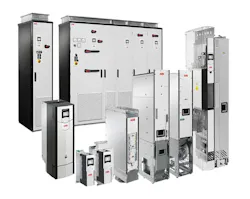
“These modernized drives are able to monitor and identify changes in operating behavior such as bearing wear or damage, coupling or gear misalignment, or pump cavitation,” explained Deuchar. “This means remedial action can be taken well before a costly failure or lengthy downtime can occur.”
Beckhoff offers a range of technologies to help companies revamp drives and motion control systems to support smart manufacturing capabilities, including smart sensor add-ons and GPU-powered compact industrial PCs to drive analytics, AI and predictive maintenance applications. Beckhoff’s Smart System Diagnosis can be retrofit on servomotors to ensure precise real-time measurement of vibration, humidity and temperature characteristics which, when combined with TwinCAT analytics, powers predictive maintenance and condition-monitoring applications for asset optimization.
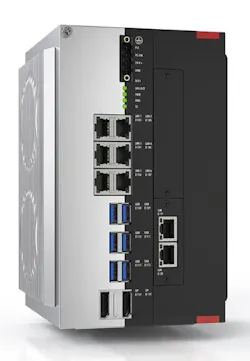
The recently released C6043 industrial PC from Beckhoff is equipped with an Nvidia GPU, enabling it to handle highly demanding industrial workloads such as advanced motion control, connectivity, condition monitoring and AI applications. This IPC accommodates the deterministic, real-time requirements of motion control applications while also allowing for the additional processing overhead required by AI and predictive maintenance activities.
Upgrading from the edge
Adding edge-based components is another way around having to replace existing equipment. For example, if existing assets lack processing power or memory required for modern communications, adding intelligence at the edge through devices or gateways can extend connectivity, enable local data processing and integrate legacy assets into modern digital architectures.
Finding solutions that support a plug-and-play architecture is a key strategy for mitigating integration challenges and making sensor or communications capability upgrades much easier, said Matt Prellwitz, drive technology product manager at Beckhoff. “An architecture that supports plug-and-play design allows you to swap out for more modern capabilities, whether that’s an operating system, communications protocol or a bigger processor with more memory.”
Motion control retrofit examples
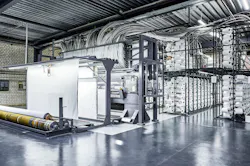
When electronics components on its legacy tufting machine started to regularly fail, Vetex, a German carpet manufacturer, opted for a stepped modernization approach using a Beckhoff PC-based control system and compact drive technology. The company’s previous drive technology was replaced with synchronous servomotors and compact servo drives, along with Beckhoff’s Industrial PCs and the TwinCAT automation software. In this application, TwinCAT translates patterns planned by a graphic designer into position setpoints and yarn lengths for each stepper motor drive while generating motion profiles. The industrial PC and TwinCAT 3 software deliver access to real-time memory to ensure these data-rich files can be processed.
At Al-Bardi Paper Mill Co., ABB Motion’s modernization services were the key to retrofitting a trio of legacy drives with new technology once spare parts were no longer easily available for the company’s legacy drives. The upgrade approach here introduced the latest ABB ACS880 technology to the multidrive, but maintained use of the existing cabinet, including infrastructure and cabling, which helped reduce waste. The changeover of the drive modules increased drive performance by approximately 30%, while requiring less maintenance and extending the lifetime of the equipment, according to Al-Bardi’s estimates. According to ABB, the entire process of changing the drive modules took only 72 hours with no major disruption to the mill’s production.
Configuring for cybersecurity and standardization
As manufacturers reimagine proprietary networks and legacy industrial assets for the digital world, security remains a top concern. With that in mind, drive and motion control system vendors are rolling out upgrades that add extra memory or processing power to accommodate AI-based analytics or IIoT applications along with security capabilities such as encryption and/or user authentication to create a cybersecure gateway for data, whether the data is channeled to the cloud, a local asset performance management system, or even to local MES and ERP systems.
An upgrade might be the better option than replacement if substantial changes are required to implement a new drive, such as new cabling, foundations, floor reinforcements and air conditioning.
“Cybersecurity is something that everyone needs to be aware of and integrate into their operational plans, and it may not require a significant investment,” noted John Partin, senior motion and robotics business development manager for Schneider Electric. Older machines may not need to be on the network, thus they can be isolated in segmented networks with strict access controls and firewalls, he said.
In cases where data from those legacy machines is needed, Partin recommends integrating a secure edge box to ensure requisite data is only communicated one way and there are proper data restrictions.
About the Author
 Beth Stackpole, contributing writer
Beth Stackpole, contributing writer
Contributing Editor, Automation World
 Leaders Logo
Leaders relevant to this article: