How Taylor Guitars Went from Pen and Paper to a Single Pane of Glass SCADA with Ignition
Key Highlights
- Taylor Guitars consolidated fragmented HVAC, machine and product data into a single platform, eliminating arguments about operations and enabling the creation of quick solutions to operator problems.
- RFID-driven automation reads guitar specifications directly, eliminating daily recipe programming and capturing retiring luthiers' expertise.
- Created an in-platform ticketing system that allows workers to report issues and track resolution status without additional logins or integrations.

When you're making more than 600 guitars a day across two facilities, all from wood — a material that Tyler Robertson, R&D engineer at Taylor Guitars, describes as "the cause and the problem of everything we do" — it helps to have dependable control systems.
At Taylor's El Cajon, Calif., facility, they produce more than 100 guitars daily, while their Tecate, Mexico, factory cranks out more than 500 guitars as well as cases, bags and accessories for Taylor and other brands.
With such significant production targets and dealing with variable core materials, the challenge facing Taylor was how it could maintain the artisan-level quality it has long been known for on an industrial scale.
Confronting the information silos problem
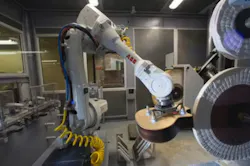
Numerous technologies such as sensors, CNC machines and robotic buffing and painting stations help Taylor Guitars produce large quantities of guitars every day. Factored into this mix of typical industrial automation tools is an HVAC management system that controls the company’s kilns and wind tunnels where wood for the guitar bodies and necks condition for weeks or months depending on origin, type and eventual use.
This array of equipment and technologies presented Taylor Guitars with a well-known manufacturing information challenge: siloed information systems.
"We had different controllers for different machines and HMIs with different interfaces on them," Robertson explained during his presentation at Inductive Automation’s annual user conference. For example, the HVAC staff managed environmental controls while leaning on IT to provide the infrastructure, creating a patchwork of disconnected systems that made it difficult to get a clear picture of production from an operations level.
This fragmentation caused friction. Disagreements about how things actually worked were common because there was no central source of truth. If someone wanted to know the temperature in a particular building or check pump settings on the spray robot cell they were in charge of, they'd have to navigate through multiple systems with different interfaces.
Finding Ignition by taking advice from a local water district and brewery
Robertson's path to Inductive Automation’s Ignition platform came through an unexpected source. "There was a case study with the Helix Water District, our water district, and I saw they used many of the same controls we did," he recalled. So, when Robertson began evaluating control software vendors to streamline Taylor’s operations, he spoke with the water district and they gave him simple advice: "Don't just buy Ignition. Start using it. Don't look at anything else. Just go, trust us, we've gone down that path."

That endorsement led Robertson to check out Stone Brewing's operations in San Diego, another local Ignition user. Convinced by what he saw at both locations, Taylor Guitars adopted Ignition and launched its first application called Factory View.
Building Taylor Guitars’ single pane of glass
Factory View became the foundation for what Robertson calls Taylor's "single pane of glass initiative," as it provided a way to establish a central location for operations information across the company.
"If you want to know what the temperature is in one of our buildings, you can now click on that building on a screen and see readings from our temperature sensors there," Robertson noted.
The impact went beyond just the data visibility provided by the Ignition platform. "This shut down so many arguments at our company as to how things work because we could finally document everything," he said. The ability to create quick dashboards made previously obscure information accessible, reducing organizational noise and establishing a foundation for the next phase: connecting detailed manufacturing information to standardize processes.
Production staff become part of the automation process
One of the most striking aspects of Taylor's Ignition deployment is how it changed the relationship between engineering and production staff. Robertson credits their experienced workforce with having the right attitude: "Their attitude towards automation is not ‘what are you doing to my job?’ They see that it's more about making their job easier. And when they see that, they want to know ‘when can you get this done?’"
If you're making SKUs every single day, you either have to make a new recipe every single day or program every single day, and then your operators have to select that. That was untenable for us.
Ignition enabled Robertson's team to say yes to requests that would have been impractical before. For example: "We had operators asking if they could have a machine status screen on a certain wall. And I asked why? They told me that having a display on that wall would keep them from having to walk around the corner to look at the light on the machine to see its status."
The machine the operators were referring to is used to rotate guitars for exactly seven minutes for off-gassing, a critical process to prevent finish problems with solvent popping. After implementing Ignition, Robertson said adding the status screen operators wanted was trivial.
“If we didn't have Ignition, I would have said there's no way we're doing that. You'll just have to keep walking around to see the machine,” Robertson said. “But with Ignition, you can create a display like this in an hour.”
This ability to be so responsive to operators fundamentally shifted the company’s approach to technology deployment. "We're now never limited by technology,” he said. “This changed how we approach automation projects. We now start with questions like: How is this going to look for the operator? How are they going to interact with it? Once we have those answers, we design it from there."
Connecting Taylor’s legacy equipment
Like many manufacturers, Taylor has equipment spanning decades. One CNC machine from 1995 still runs using serial communications. Rather than replacing functional equipment, Robertson integrated it into Ignition.
"I'm getting the G code from the CNC and sending it to my PLC. The PLC gets the program name with a lookup table that knows how many parts it's making. With that information, I can estimate setup time and downtime based on those runs," he explained.
If we didn't have Ignition, I would have said there's no way we're doing that. But with Ignition, we can create a display like this in an hour.
They were also able to connect the CNC's spindles and VFD amperage for more detailed insights in the machine’s day-to-day operation.
This data integration revealed production optimization opportunities. For example, analysis of that machine’s operating data showed that running the machine automatically during lunch could save production significant time.
Robertson noted that this kind of insight would have been impossible without the consolidated data Ignition manages.
RFID and product information help close production loops
Process and machine information only tells part of Taylor’s story. "The missing piece of the puzzle was our product information," Robertson said. "We needed that product information to be tied with our process and machine information."
The solution involved installing RFID stations at every workbench. Previously, workers received paper descriptions of the guitar they'd build that day. Now guitars have embedded RFID tags that workers scan to access all relevant information, such as specifications, special handling requirements, wood certification data and custom tooling needs.
The RFID system interface included something that proved transformative for Taylor: a green button labeled "we want your feedback." This opened a direct communication channel for staff to report specification errors or material problems.
Initially managed through email, Robertson built a ticketing system directly in Ignition connected to the RFID system. "Now I don't have to manage new logins for different tools or LDAP integration with something else," he noted. The system displays across 130 RFID stations in the El Cajon facility, allowing anyone who submits feedback to check its status.
"That added to our culture because people were able to participate in closing manufacturing loops quicker," Robertson explained. When staff see problems get resolved and can track progress, they stay engaged in continuous improvement.
Capturing retiring knowledge
Like every manufacturing company, Taylor is seeing its experienced luthiers begin to retire. This issue confronted Taylor with a knowledge transfer challenge. To help deal with this, they built two automated machines — one for building guitar necks and another for neck quality control. In both machines they planned to encode decades of their luthiers’ expertise.
This project brings us back to the importance of wood in guitar manufacturing. Wood variance meant Taylor creates new SKUs daily. "If you're making SKUs every single day, you either have to make a new recipe every single day or program every single day, and then your operators have to select that. That was untenable for us," Robertson said.
That added to our culture because people were able to participate in closing manufacturing loops quicker. When staff see problems get resolved and can track progress, they stay engaged in continuous improvement.
The solution to this problem leveraged their RFID database. By reading the RFID tag from a guitar neck, machines can manage details like fret positions and fingerboard radius — everything needed to run the machine with one button push.
Robertson added that a servo press with high-precision sensors in the neck building machine captures force data during fret installation, creating analyzable records of each process.
"With Ignition, we can analyze this process and use AI tools to look at this data and ask, why was that one so good?" Robertson said. As this data is verified, successful parameters become new recipes automatically applied to matching guitars, regardless of SKU.
For neck quality control, Taylor deployed 3D laser scanning to capture 100-megabyte images of each neck and compare them against SKU-specific tolerances. The goal here is to catch defects in the neck department before final assembly.
Robertson saves every scan for future reference — something he wishes they'd started years ago. Before Ignition, they used standalone vision software with its own licensing, HMI designer and proprietary expression language. "It kind of just sucked to use," he admitted.
Finding vision software with OPC UA support changed everything. And integrating this software with Ignition was straightforward, leading production performance to improve dramatically, as scan times dropped from a minute to 22 seconds with sub-second calculation time. All of the vision software’s data flows to the database and displays in Ignition.
Robertson summed up the impact by saying, "Ignition really changed things for us in going from pen and paper to a SCADA system that became our single pane of glass. But it also allowed us to start driving our machine automation processes from our data. We did it with a small team, and we had fun while we were doing it. In the end, it produces better guitars."
Editor’s note: Automation World met with Tyler Robertson at Taylor Guitars in 2017 to get a glimpse of how they were automating some of the company’s traditional manual processes. See that article: Finding the Fit for Automation.
More production automation insights from Automation World:
About the Author
 David Greenfield
 Leaders Logo
Leaders relevant to this article: