The Electric Motor Is Having Its Manufacturing Moment
Key Highlights
- Electric motors provide the precise motion needed for robotics and automated systems.
- Growing automation is increasing demand for smaller, efficient and more reliable motors.
- Advanced motor technology could help U.S. manufacturers boost productivity and competitiveness.
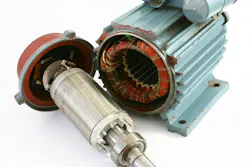
If you walked through the halls of the International Manufacturing Technology Show recently held in Chicago, one message would be impossible to miss: manufacturing is becoming more automated, electrified and intelligent.
But amid the excitement surrounding artificial intelligence, robotics and advanced automation, manufacturers should not overlook one of the technologies making much of this transformation possible - the electric motor.
The global electric-motor market is projected to reach roughly $176.5 billion here in 2026, underscoring the extraordinary scale of an industry that increasingly sits at the intersection of manufacturing, transportation, energy and automation. At the same time, the U.S. robotics market is estimated at approximately $11.4 billion, reflecting the growing appetite for machines capable of improving productivity, precision and consistency.
These trends are not independent. They are, in fact, deeply connected.
Every industrial robot, automated production line, conveyor, machine tool, pump or motion-control system ultimately depends on the ability to convert electrical energy into precise mechanical movement. And as automation becomes more sophisticated, the requirements placed on motors become more demanding.
Today’s manufacturers need compact, efficient, reliable and controllable motors capable of delivering performance under increasingly challenging operating conditions. That makes the electric motor not an old technology being displaced by robotics, but a foundational technology being reinvented for the robotic age.
The timing could hardly be more important for American manufacturing.
The International Federation of Robotics reports that U.S. industrial-robot installations increased 11% in 2025 to 38,000 units, with automotive installations reaching 13,500. Food-industry robot adoption surged 30%, demonstrating that automation is expanding beyond its traditional manufacturing strongholds.
Yet the United States still has considerable ground to cover.
America has approximately 307 industrial robots per 10,000 manufacturing employees, ranking eighth globally. China, meanwhile, has built an enormous industrial automation ecosystem, with robot installations estimated at roughly ten times the U.S. level.
This competition makes the engineering and manufacturing of critical motion components strategically important.
The motor inside a robot is not simply a commodity component. It influences acceleration, precision, energy consumption, thermal management, payload capacity, reliability and ultimately the economics of the entire machine.
As robotic systems become more compact and mobile, motors must deliver greater performance from smaller packages.
As factories demand continuous operation, durability and thermal efficiency become equally important.
This is where modern motor technology can help American manufacturers compete, not by replacing the worker, but by making the worker more productive.
The most compelling vision for automation is not a factory devoid of people. It is a factory where machines handle repetitive, hazardous or physically demanding tasks while skilled employees focus on programming, quality control, maintenance, engineering and higher-value decision-making.
We are already seeing that transition. The latest U.S. robotics figures show automation spreading into food production, logistics and other nontraditional applications. At the same time, manufacturers are confronting persistent workforce shortages and pressure to produce domestically with greater speed and consistency.
Electric motors are central to that equation.
IMTS 2026 brought together more than 2,000 exhibitors and represents the largest manufacturing technology show in the Western Hemisphere. But its significance no doubt extends beyond individual machines on the show floor.
IMTS also represented a broader question facing American industry: How do we build a more productive, resilient and technologically capable manufacturing base?
Our answer is that we cannot afford to overlook the fundamentals.
Artificial intelligence may provide the intelligence. Robotics may provide automation. Digital systems may provide connectivity. But motors provide the movement.
The next era of American manufacturing will depend on all four working together.
The electric motor deserves to be viewed accordingly, not as yesterday's technology, but as an essential platform for tomorrow's industrial economy. As robotics, electrification and advanced manufacturing accelerate, the companies capable of making motors more efficient, durable, precise and adaptable will help determine how successfully American industry competes.
The future of manufacturing may look radically different.
But it will still need to move.
About the Author
 Leaders Logo
Leaders relevant to this article: