Ambi Robotics, Pickle Robot Company Integrate Robotic Systems
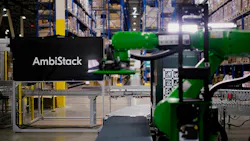
AI robotics company Ambi Robotics and Pickle Robot, which applies physical AI systems to supply chains, are integrating their robotic systems to automate the movement of packages from trailer unloading through pallet stacking and warehouse reception.
The deployment combines Pickle Robot’s unloading robots with Ambi Robotics' AmbiStack multi-purpose stacking technology. The duo aim to enable a continuous and autonomous flow of packages from inbound trailers through warehouse-receiving operations.
Cases are unloaded from trailers by Pickle Robot’s systems, then inducted via conveyor into AmbiStack for identification, scanning and stacking for downstream warehouse operations, according to the companies. This leverages existing warehouse infrastructure and systems with the goal to allow customers to fully automate inbound processes without facility redesigns, the companies said.
The collaboration demonstrates how warehouse operators can deploy specialized automation technologies from multiple providers to address labor-intensive workflows, including persistent dock-door challenges, while maintaining operational flexibility, according to the companies.
“Customers want automation that improves real-world throughput while fitting into existing operations,” said AJ Meyer, founder and CEO of Pickle Robot. “This collaboration shows how robotic unloading can integrate seamlessly with downstream automation systems to help move goods more efficiently through the warehouse, and it sets the stage for orchestrating multi-robot processes that can self-improve and self-correct over time.”
AmbiStack is designed to integrate with a range of warehouse systems and automated technologies, enabling operators to deploy it within broader material-handling environments without reliance on a single-vendor ecosystem, according to Ambi Robotics.
Pickle Robot’s systems are similarly designed to operate within existing warehouse facilities, automating trailer and container unloading without requiring infrastructure redesign, making the technologies natural complements in an end-to-end inbound workflow, they said.
More supply chain insights from Automation World:
Schneider Electric Announces its U.S. Facilities are NEMA Certified
Automation World Q&A: How Physical AI Is Making Supply Chains Come To Life