Q&A: Industrial Automation Experts Explain How To Modernize Legacy SCADA And HMI Infrastructure
Key Highlights
- SCADA/HMI systems have provided efficient and reliable industrial control and monitoring for decades, but they face serious challenges when integrating with current technologies.
- When bringing legacy SCADA/HMI systems up to Industry 4.0 speed, the top challenges include overcoming the complexities of integration with diverse protocols, and having access to mass volumes of current and historic data plus cloud and edge analytics in real time.
- There is no shortage of tools available to address and rectify almost all current issues. And most are updateable to take on future challenges.

Entrenched for decades in the industrial space, Supervisory, Control and Data Acquisition (SCADA) and Human-Machine Interface (HMI) applications play critical roles in manufacturing automation. However, over those decades, rapid technology advances, e.g., wireless connectivity, cloud and edge computing, and ever-present cybersecurity threats, generate serious challenges for integrating legacy SCADA/HMI deployments with newer technologies.
To address these challenges, Automation World (AW) gets answers and effective solutions from top experts in the field. These include Adam Schindewolf (AS), product marketing manager for Emerson’s Aspen Technology Business; Linda Htay (LH), automation product marketing manager for IDEC Corp.; Alan Cone (AC), product specialist WinCC SCADA/HMI products for Siemens; and Christopher Deloglos (CD), strategic product manager for u-OS for Weidmuller.
AW: How do manufacturers handle conversion and mapping of legacy data formats to modern standards like OPC-UA, MQTT or other industrial IoT protocols?
LH: Many factories operate machines installed years ago, often using proprietary or older communication protocols not designed for cloud connectivity or advanced analytics. Rather than replacing these systems, manufacturers deploy edge devices, HMIs, gateways, or controllers that can communicate with both legacy equipment and modern platforms. These devices help collect, normalize and securely transmit operational data using standards such as MQTT, OPC UA, Modbus TCP or EtherNet/IP.
AC: Manufacturers can map legacy data formats with the use of gateways. This includes hardware gateways that plug into devices and change data types before output, or software applications that run on separate machines, translating and mapping the data from one format to another.
CD: Digital transformation struggles against plant floors having a mix of generations of communication technologies. Serial Modbus devices sit next to Ethernet/IP PLCs and next to IIoT devices communicating via OPC UA and MQTT. Manufacturers must handle this conversion at the edge, where a single device can handle multiple protocols, aggregate the data and republish it in a standardized and meaningful format.
AW: How does a historian system handle high-frequency data collection and long-term storage?
AC: There are several ways to collect and store historical. Siemens’ Windows Control Center (WinCC) Historian acquires data based on configured settings, like cyclic continuous, on-change, event-driven or hysteresis. WinCC also includes fast and slow tag logging options. Data handling between these two methods varies to limit disk operations while preserving the data. Additionally, date and filter can be batched and evaluated based on value change.

Siemens Windows Control Center (WinCC) is a SCADA/HMI software platform developed for industrial automation. It enables operators to monitor, control, and optimize industrial processes and supports Industry 4.0 and IIoT strategies through connectivity protocols like OPC-UA.
CD: The requirements of high ingest rate and long retention pull in opposite directions, so the answer is tiered storage. Weidmuller u-OS enables this either through apps like PROCON-Connect or third-party databases managed through containerization, allowing high-frequency data to be captured near the source, avoiding latency and bandwidth penalties of shipping every data point to a central server. This ties into long-term storage through down sampling and retention policies, allowing complete data to be stored locally for a period, then pushing out aggregate, down-sampled or change-based data to a central historian or cloud.
AW: What specific connectors and APIs are necessary for integrating with ERP systems and MES platforms?
AC: We provide MQTT and OPC-UA connectors in WinCC products to facilitate communications to ERP, MES, and other high-level systems. We also have open systems and APIs such as GraphQL & REST, and we empower users to develop their own custom communication drivers.
CD: u-OS is an open, flexible, independent platform, designed for interoperability with third-party platforms, either through containerized support of third-party applications, or through its three integral Data Hub APIs. It offers a REST/HTTP API over JSON for easy data access, a NATS API for high-performance messaging and a real-time interface for the lowest-latency needs.
Third-party applications used include Node-RED on the device to format and route payloads to a specific ERP or MES endpoints without writing a custom application. Rather than a fixed list of proprietary ERP connectors with license tolls, u-OS provides open, well-documented APIs, allowing integrators to map to whatever schema the target system requires.
AW: How does your platform enable real-time data streaming to cloud-based analytics platforms?
AS: Emerson’s Inmation enables real-time data streaming by acting as a data fabric between OT systems and downstream IT/cloud data consumers. It continuously ingests and contextualizes live operational data from control systems, historians and other data sources, then publishes that data through streaming interfaces such as MQTT, REST APIs, or direct cloud connectors.
As the platform supports filtering, aggregation, and contextualization on-prem at the point of ingestion, only relevant, high-fidelity data is streamed to cloud platforms. This reduces bandwidth usage and ensures analytics environments receive structured, analytics-ready data in near real time.
LH: Real-time visibility is a key requirement for improving efficiency, predictive maintenance, and operational decision-making. A common method for transmitting operational data to cloud platforms is MQTT, a lightweight publish/subscribe protocol designed for Industrial IoT applications.
IDEC's FT1J/FT2J and HG1J/HG2J HMIs can serve as a bridge between existing control systems and modern data architectures. By leveraging MQTT and Ethernet-based communication, users can continuously stream machine status, production metrics, alarms and process variables to cloud-based analytics systems with minimal network overhead.
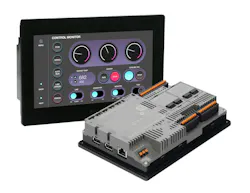
IDEC’s FT2J combined PLC and HMI (PLC+HMI) provide options for new designs to support IIoT data and analytics initiatives, and for retrofit projects to serve as a communication layer between old a new technologies, with broad protocol support and extensive device connectivity.

AC: Siemens’ WinCC integrates a service—WinCC Cloud Connector—to act as the pathway to stream data to cloud systems. This connector uses OPC UA and MQTT as the protocols to communicate with cloud services.
CD: Several historian timestamped applications can be installed and run on our u-OS platform to stream real-time data to cloud-based data ingestors like AWS’s S3 buckets and Azure Blob Storage. Node-RED and MQTT are default application examples.
AW: How do you ensure data continuity and historical data preservation during system transitions, and what tools do you provide for gradual migration without operational downtime?
AS: As it operates non-intrusively alongside existing systems, Inmation suits gradual migration strategies. It can ingest historical and real-time data simultaneously from legacy historians and control systems without disrupting their operation, creating a decoupled data layer. This allows manufacturers to validate new architectures, backfill historical datasets and gradually shift data consumers to the Inmation data fabric without downtime. Its ability to unify multiple historians also supports continuity during consolidation or replacement efforts, ensuring that historical data remains accessible and consistent across the transition.

AC: WinCC uses SQL database structure, enabling compatibility with many older systems for import into WinCC. We also suggest running both the systems for a period when migrating to newer platforms to give operators time to familiarize themselves with the new system while the old system remains available. This provides time to test and gain confidence in the new system, while maintaining data integrity.
CD: With u-OS there’s no need to replace your system. u-OS gives you the flexibility to lay down new data pipelines in parallel with the existing SCADA/historian, to validate against the known-good source, and only cut over when the new data matches. Local edge buffering preserves continuity during the transition, keeping the system running if the cloud upstream is offline. And configuration export/import lets customers replicate a proven setup across lines and sites rather than rebuilding each one by hand.
AW: How do you handle hybrid environments where new systems must coexist with legacy equipment?
AS: Inmation is designed to sit between and across existing OT and IT systems, integrating both legacy equipment and new systems into a single data fabric. Supporting a wide variety of protocols and data sources, it can simultaneously interface with PLCs, DCSes, SCADA systems, historians, MES, LIMS and newer cloud or IIoT solutions. This approach avoids the need for disruptive rip-and-replace strategies, while enabling modernization at a controlled pace.

LH: Most facilities contain a mix of new equipment, legacy machines and systems from multiple vendors. Therefore, successful digital transformation initiatives often focus on gradual modernization rather than complete replacement. Industrial HMIs and gateways play key roles in hybrid environments by serving as a communication layer between old and new technologies. IDEC HMIs support this approach through broad protocol support and extensive device connectivity.
AC: In hybrid systems, WinCC can support older protocols either natively or through gateways to allow control and monitoring of legacy equipment. This allows for continued operation of the plant while upgrading systems over time.
CD: A u-OS device sits between the legacy layer and the modern layer, easily and non-invasively talking to both legacy and modern protocols. It can present clean OPC UA or MQTT data to new MES, analytics and cloud systems.
Robust and native integration of containerization is the enabler here. CODESYS control logic, PROCON-Connect, Node-RED, databases and customer applications all run as managed apps on the same device, so customers can add capabilities incrementally without disturbing what’s running. The Weidmuller Edge Agent specifically targets this brownfield modernization, giving a solution to drop in next to existing equipment, expose that data and start getting value without an overhaul.

AW: How do you support edge analytics versus cloud-based processing, and what tools are available for creating custom dashboards and KPI monitoring?
AS: Inmation supports edge and centralized processing by allowing its components to be deployed across on-premise, edge and cloud environments. Data can be processed and contextualized close to the source or forwarded to centralized or cloud systems for deeper analytics. This flexibility lets organizations align compute placement with use case requirements.
For visualization and KPI tracking, Inmation integrates tools for creating dashboards, as well as integration with external BI platforms like Power BI or Tableau. Its contextual data model makes it easier to define meaningful KPIs and expose them consistently across different visualization tools.
LH: Many manufacturers adopt a combination of edge and cloud-based analytics. Edge processing enables operators to make real-time decisions directly at the machine level, while cloud platforms provide broader visibility across multiple machines, production lines or facilities. At the edge, visualization tools such as HMIs provide operators with dashboards, alarms, trends and performance metrics that support immediate operational decisions. Cloud-based platforms can then aggregate and analyze data across the organization for long-term optimization.
IDEC HMIs provides local visualization through customizable screens, alarm management, trending, data logging and custom web pages. At the same time, they can act as edge gateways by transmitting operational data through MQTT and other communication methods to external analytics platforms.
AC: Siemens’ Industrial Edge is a ready-to-use edge computing platform that bridges the gap between IT and OT by helping users develop dashboards for monitoring processes, along with additional applications for equipment KPI analysis.
CD: u-OS treats the edge and cloud as complementary systems, not competitors. Time-sensitive logic like threshold detection, local control reactions and alarming belong at the edge where latency is lowest. Heavier, long-term analytics across many sites belong in the cloud. u-OS lets customers decide where each workload runs and shift boundaries when necessary. Toolsets for dashboards and KPIs are open, including tools like Node-RED for building data flows and logic, InfluxDB for time-series storage and PROCON-WEB for scalable SCADA-style dashboards, OEE-style KPIs and trend visualization.
AW: What mechanisms exist to detect and flag anomalous data, missing values or communication errors that could compromise analytics accuracy?
AS: Inmation includes data quality monitoring capabilities that identify anomalies, gaps and communication issues at the ingestion and aggregation stages. It tracks data availability, timestamps and quality indicators from source systems, allowing users to detect missing or delayed data. Additionally, rules and calculations can be configured within the platform to flag abnormal values or inconsistencies based on thresholds or business rules.
LH: Reliable analytics depend on reliable data. Undetected communication failures, device faults, missing values and abnormal operating conditions impact the accuracy of operational insights. To address this, manufacturers implement multiple layers of monitoring, including alarm management, event logging, communication diagnostics and automated notifications. IDEC HMIs integrate these capabilities through alarm management functions, communication diagnostics, status monitoring and event logging.
AC: WinCC uses a combination of tag quality codes, communication drivers, alarming frameworks, and historical archiving controls to detect and flag anomalous or erroneous processes (Figure 1). These include tag-quality codes, channel diagnostics, substitute values to prevent erroneous analytics, cyclic-selective archiving to configure tag logging and dynamic dialogs to allow users to visually and programmatically monitor quality codes of external tags.
CD: Quality signaling starts at the point of collection. Monitoring connection health for each interface can raise alerts when a source goes unreachable or a connection fails. On top of that, customers build rules-based logic to catch out-of-range values, frozen tags, and gaps in expected updates, then trigger notifications whether via email, SMS or webhook.
AW: What redundancy and failover mechanisms do you provide to ensure continuous operation during system upgrades or maintenance?
AS: Inmation employs a distributed, service-oriented architecture that supports redundancy and high availability. Key components are deployable in redundant configurations, with failover mechanisms to ensure continuous data flow. Data buffering and store-and-forward capabilities protect against temporary network or system interruptions.
This architecture allows for maintenance or upgrades on parts of the system without bringing the entire platform down. Decoupling data producers, brokers and consumers, Inmation minimizes single points of failure and ensures operational continuity across both planned and unplanned events.
AC: WinCC is configurable as a redundant system to ensure continuous, high-availability plant management by running two parallel, interconnected WinCC servers: master and standby. If one server fails, clients automatically switch to the backup. If the primary server fails, the system immediately switches over to the redundant partner. When the failed server comes back online, the system automatically copies missed messages, process values, and user archives from the active server.
CD: Store and forward utilizing an onboard historian maintains data acquisition and integrity and is configured to transfer the data at customer defined rates and will continue to store data for a configurable retention policy in the absence of a cloud connection.
AW: How do you ensure staff can effectively manage both traditional SCADA functions and new analytic capabilities without retraining?
LH: An overlooked aspects of digital transformation is user adoption. New technologies offer significant benefits, but organizations often hesitate to implement systems requiring extensive retraining or disrupting workflows. Many modernization projects take an incremental approach, allowing operators to use familiar interfaces while gradually introducing new capabilities. IDEC follows this philosophy by combining traditional HMI functionality with modern Industrial IoT features.
AC: Data analytics is a core part of SCADA. Tools in the WinCC system provide simple viewing and analysis, like charts and tables. Additionally, more advanced options support deeper analysis in a graphical and accessible format. We provide tools that help monitor messages and alarms to provide criteria like hit rate, average time between alarms, response times and more. We also provide tools that empower users to develop KPI dashboards to assess operational efficiency at the plant or equipment level.
CD: Weidmuller u-OS leans on familiar tools rather than proprietary environments that demand new skillsets. Control engineers continue to work in ladder logic or IEC 61131 languages in CODESYS. The analytics and integration side offers simple-to-use software such as menu-based PROCON-Connect, PROCON-WEB or documented third-party tools with communities like Node-RED, InfluxDB and Grafana.
The u-OS Edge Agent is designed around fast, low-friction setup in an intuitive interface without deep knowledge of the system. And the open-platform approach means existing OT staff can manage day-to-day SCADA functions while gradually layering in analytics at their own pace.
About the Author
 Mat Dirjish, contributing writer
Mat Dirjish has years of tech reporting experience at B2B technology publications such as Electronic Products Magazine, EE Product News, Electronic Design, Sensors Online & Sensors Expo, and Sensors Daily. He's been a regular contributor to Automation World since 2023.
Related


 Leaders Logo
Leaders relevant to this article: