How a Two-Week Maintenance Overhaul Cut Downtime by 10% at a Major Snack Food Manufacturer
May 13, 2026
5 min read
Key Highlights
- The framework classified equipment by failure behavior rather than machine type, enabling consistent monitoring logic across dough processing, extrusion, baking and packaging.
- Rotating use of a single portable vibration device across grouped assets replaced the need for fixed sensors on every machine, keeping implementation costs minimal.
- Operators were trained to report specific abnormal conditions, such as unusual noise, vibration, overheating or product buildup using a structured escalation logic that fed directly into planned maintenance decisions.
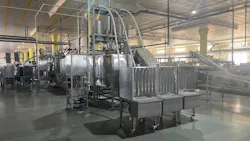
In early 2024, I was invited by Bikaji Foods International Ltd. to assess and improve equipment reliability at its production site in Bikaner, India. The engagement resulted in measurable operational improvements within a limited two-week period.
The facility operates multiple automated lines producing pretzels, breadsticks, corn chips, cereal bars and lavash-based products, where operational stability is critical to maintaining output.
Rather than conducting a traditional audit centered on equipment replacement or major capital upgrades, the work focused on identifying systemic inefficiencies in maintenance practices and improving how early warning signs were recognized and addressed.
A system-oriented approach to maintenance
The approach introduced during the engagement was based on structured maintenance logic, early signal detection and simplified data tracking without reliance on complex or capital-intensive predictive maintenance systems.
Working in coordination with plant leadership, maintenance managers and production personnel, the intervention focused on analyzing recurring failure patterns and restructuring maintenance workflows. The framework applied was based on an integrated maintenance optimization model designed to improve predictability and reduce unplanned downtime.
Implementation focus: practical and scalable adjustments
The changes introduced during the engagement emphasized practicality and scalability.
Maintenance schedules were adjusted to reflect actual equipment behavior rather than fixed time intervals alone. For example, inspection and lubrication frequency for selected components was revised based on operating conditions, load, contamination exposure and the recurrence of specific failure modes observed on site.
Basic monitoring tools were introduced to help maintenance teams identify early indicators of mechanical deterioration. These included handheld vibration measurement devices, infrared thermometers and structured visual inspection routines.
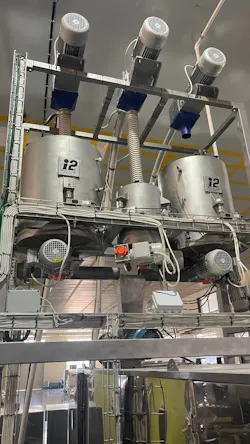
For example, vibration checks were periodically performed on pumps and gearboxes showing early signs of instability, allowing early detection of imbalance or bearing wear before failure. Temperature checks were used to identify overheating in motors and bearings under load conditions, while operator observations helped detect irregular motion or product buildup in conveyors and forming equipment.
Communication between production and maintenance teams was improved by introducing a structured reporting flow. Operators were instructed to report specific abnormal conditions such as unusual vibration, noise, overheating, product buildup, irregular motion or repeated minor stoppages using a simplified escalation logic.
For instance, repeated short stoppages on specific lines, which were previously often overlooked, were systematically reported. This allowed maintenance teams to identify developing issues such as misalignment or contamination before they escalated into major downtime events.
Decision-making processes for technicians were standardized to reduce variability and dependence on individual experience. As an example of this, if abnormal vibration was detected but remained within acceptable limits, the equipment continued operating under increased monitoring frequency. If vibration levels increased or were accompanied by temperature rise, a planned intervention was scheduled before failure occurred.
A particularly notable aspect of the implementation was its applicability across different production stages, including dough processing, extrusion, baking and packaging.
Similarly, recurring minor faults triggered predefined actions such as lubrication adjustment, alignment checks or inspection of wear components instead of repeated reactive repairs.
The implementation did not involve major capital investment, but rather a restructuring of existing processes and response logic.
Underlying methodology
The approach applied during the engagement was based on a structured maintenance framework combining rotational condition monitoring, simplified data logging and failure-pattern-based equipment evaluation.
In this application, rotational condition monitoring referred to the scheduled use of portable diagnostic tools across multiple machines on a rotating basis, instead of installing fixed monitoring systems on every asset.
For example, instead of installing permanent sensors on all pumps, a single portable vibration device was used to periodically check groups of similar equipment on a rotating schedule.
This included periodic vibration checks, temperature readings, environmental condition checks and abnormal sound observations on selected groups of equipment. The purpose was to identify developing issues in a practical and scalable manner while keeping implementation costs low.
The purpose was to identify developing issues in a practical and scalable manner while keeping implementation costs low.
Simplified data logging was carried out using accessible tools, including spreadsheet-based tracking tables and structured maintenance records. For example, recurring issues such as bearing overheating or conveyor misalignment were tracked over time, allowing identification of patterns and enabling planned interventions instead of repeated reactive repairs.
The methodology also emphasized classification of equipment according to failure behavior rather than only by machine type. Assets with similar wear characteristics, environmental exposure, or repetitive failure modes could therefore be evaluated using comparable monitoring logic even when they belonged to different stages of production.
This framework was developed based on practical implementations across multiple industrial environments and was designed to be transferable across different production systems.
Measured results after implementation
The objective of the intervention was to establish a system that could be sustained internally without continuous external involvement.
Follow-up performance data collected approximately six months after implementation indicated a reduction in equipment downtime of approximately 9% to 10%, along with a decrease in spare parts consumption of around 12%.
Decision-making processes for technicians were standardized to reduce variability and dependence on individual experience.
These improvements contributed to increased production stability, fewer unplanned stoppages and reduced maintenance-related interventions during operating hours.
In addition, the changes supported reduced labor-related inefficiencies, lower energy use and improved overall production consistency.
Applicability across different production environments
A particularly notable aspect of the implementation was its applicability across different production stages, including dough processing, extrusion, baking and packaging.
This demonstrates that the effectiveness of the approach is not tied to specific equipment types, but rather to system-level design and execution of maintenance processes. In this case, reliability improvement depended less on replacing assets and more on improving how equipment condition was interpreted, communicated and acted upon.
The results of this engagement demonstrate that structured, system-oriented maintenance frameworks can deliver measurable operational improvements across different industrial environments. It also highlights how targeted engineering interventions focused on early signal detection and practical implementation can improve reliability without requiring significant capital investment.
More plant maintenance insights from Automation World:
About the Author
 Tigran Hovhannisyan
Tigran Hovhannisyan
Tigran Hovhannisyan is a mechanical engineer at Rychiger Canada Inc.
Sign up for our eNewsletters
Get the latest news and updates
 Leaders Logo
Leaders relevant to this article: