Q&A: Beckhoff's Daymon Thompson Explains the Evolution of PC-Based Industrial Control
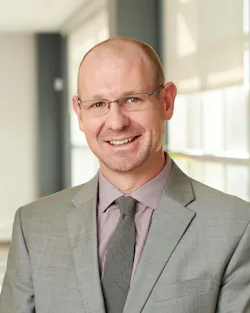
Daymon Thompson is director of product management for Beckhoff USA, which recently celebrated 40 years since they delivered the first PC-based machine control system. Thompson spoke with Automation World about what the industry has seen in those 40 years as well as what the next four decades might hold for the industrial control sector.
AW: Tell us about your history in this space and with Beckhoff.
DT: I've worked in automation since 1999 and have built a wide range of machines over the years, including dozens of CNC machines, robotics integrated into CNC platforms, packaging equipment, vision systems, pick-to-light systems for warehouse environments, laser etch machines, and more. I've built machines both in the U.S. and in Europe, which gave me a good perspective into the automation and controls needs in both markets. I've been at Beckhoff for about 15 years now, mostly in engineering and product-facing roles that gravitate toward automation software, which lines up well with my computer science background.
AW: What got you started in this space, in this career?
DT: It started with a machining class in high school, one of those half-day vocational programs where you'd spend part of the day at a university. The machining process itself was interesting, but what really caught my attention was the CNC machine sitting in the corner. I really wanted to learn how to program it and make it move to accomplish a task. That curiosity and subsequent knowledge turned into an internship and later a job at an aerospace company that built parts for NASA, Airbus, Boeing, and the like. That's where I really cut my teeth on CNC programming and manufacturing.
That experience pulled me deeper into programming, which led to a computer science degree. That education eventually brought me into the hybrid world of computer science and manufacturing: automation, PLC programming, HMI programming, SCADA, all of it. There's something about the act of programming that results in something moving and producing – that's more compelling to me than just writing a basic app.
AW: How has industrial control changed over the past 40 years?
DT: I haven't been in the industry for 40 years, but I have for 27. Even in that time, automation technology has changed enormously in some ways and stayed surprisingly stuck in others.
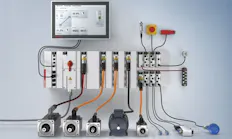
When I started, it wasn't unusual for a machine to have a dedicated PLC that didn't handle much motion. If you needed motion of any real complexity, you bolted on a separate motion controller from a different vendor. Safety was sometimes integrated, but more often it was its own standalone controller – yet another box. And most machines still needed a separate PC in a panel to run the HMI and handle basic data collection. Most machines were islands of automation – not connected to the enterprise and not collecting much data at a higher level.
Building a machine out of all these disparate components, usually from multiple vendors, worked, but it took more wiring, more gateways, more integration knowledge, and it created real headaches for lifecycle management down the road. Every component was on its own product lifecycle, and there was never a guarantee that the next generation of one part would still play nicely with everything else you'd selected. So a machine that worked great at the initial build time might need a costly re-architecture seven or ten years later, simply because a component went obsolete.
If you think about it, every one of those components had its own processor. So the obvious question becomes: why not run all that functionality on one CPU instead of a pile of separate boards with obsolescence problems? That's exactly what drew me to Beckhoff, the philosophy of keeping it simple, doing things in software instead of hardware. It’s that software-defined automation that everyone seems to be talking about now. The key piece you still need is a real-time layer, not just a PC. For Beckhoff, this is where TwinCAT automation software comes in.
When I started automating machines using PC-based control, it went very much against the grain at the time. There was a lot of skepticism, even some controls vendors were actively marketing against it like it was a weakness. Ironically, 25-plus years later, those same companies are now automating this way, even if they don't call it PC-based control. Plenty of "PLCs" on the market today are running on ARM or Intel processors under a real-time OS or Linux, but are still marketed as traditional PLCs. And why wouldn't they be?
It's the same idea Beckhoff started with back in the 80s: one piece of hardware, the underlying real-time, and software modules to replace all the hardware boxes. It makes code far easier to build and simulate on a laptop, and to move between processors without rewriting or changing it – something certain vendors still make users do when moving between "big" and "small" PLCs. And there's simply no better price-to-performance ratio than riding on the performance gains of Intel and AMD processor technology built at scale for servers, PCs, and other devices.
AW: What has spurred this change?
DT: Competitive necessity, mostly. Manufacturing applications kept demanding more axes, more processing power, and more communication protocols. This means more code that has to execute faster, and the platform overall must be more flexible and open. That pushed the industry toward vendors with that kind of offering: flexible platforms you could build on, rather than proprietary boards built around small, purpose-specific processors. PC-based control also opened the door to the communication protocols that modern IT connectivity requires, because we've moved into an era where data is the primary driver of process optimization — both in machine design and in the process itself.
In the early 2000s, a few control vendors did attempt their version of PC-based control, but without a proper hard real-time layer complementing the PC and its operating system. They just ran control code directly on the OS, which made execution inconsistent and, frankly, a little unstable. That gave PC-based control a bit of a bad reputation early on, but it was the implementation that deserved the criticism, not the philosophy. Today, it's crystal clear across the industry: PC-based control is the future of automation. That's not up for debate anymore. The open question now is which IT concepts, Docker containers, virtualized PLCs on servers, etc. will define the next steps in that evolution.
AW: Where does the emergence of things like physical AI fit into the evolution of industrial control?
DT: Great question. If you've already spent 40 years building a platform architecture like this, adding GPUs and more powerful processors is a natural next step, and it turns out to be the ideal foundation for machine learning and physical AI.
Beckhoff actually released its first real-time machine learning inference engine for the PLC back in 2019. That evolved into what we call a Machine Learning Server, which runs on the controller's operating system side and gives you GPU access for running models. Today, Beckhoff also offers industrial PC (IPC) hardware for machine control that can include a built-in NVIDIA GPU for running machine learning (ML) workloads directly on the machine, for whatever physical AI application a customer can dream up. This means one control hardware platform—not multiple boxes—that consolidate everything into one IPC. This can now include HMI, PLC, motion controller, multiple fieldbuses, communication protocols, real-time ML inference engine, ML runtime with GPU access for modern physical AI applications, or ML-based machine optimization models.
AW: Are things changing more rapidly now than ever before? What new capabilities are emerging as a result?
DT: I'd say the more powerful the infrastructure and platform you can build on, the faster you can innovate—and that's exactly what we're seeing. IT and computer science tools keep converging further with operational technology like PLCs.
Beckhoff leaned into this from day one; PC-based control was always automation plus information technology, but they pushed everything further in 2010 by bringing all the PLC, HMI, and motion control programming tools into Microsoft Visual Studio. This opened the door to standards like .NET, C++, native source control tools within the PLC development environment. Blurring the traditional controls engineering toolbox even more, we added integration with engineering tools like MATLAB and Simulink, CI/CD pipeline tooling, modern software testing via static analysis, and unit testing frameworks. Today it goes further still, with support for standards like ONNX to import machine learning models directly into the controller and call them from the PLC logic.
The future is clearly going to blend these two worlds even more with text-based programming becoming the norm, development environments taking on Visual Studio Code feel, and containerization (Docker, for instance) used to manage everything from PLC runtimes to SCADA servers.
AW: What does the next 40 years look like?
DT: It’s certain that AI will play a major role. We're already seeing early signs of this with things like TwinCAT CoAgent, which can help not just write code, but configure entire systems: building out an HMI from a sketch or concept, generating an I/O network configuration from electrical diagrams, basic code from operation descriptions. This is only going to keep evolving. The only question is exactly how far or how fast.
We're also heading toward a future where more ML models are making decisions directly on the machine, continually optimizing the process, and making small tweaks to increase output and efficiency. This isn't a "someday" scenario. It's already happening, and it will simply become the norm.
My prediction: in the future, nearly every machine controller, outside of maybe the very smallest applications, will run on PC/CPU-based hardware with an onboard GPU or NPU (neural processing unit) of some kind to power far more advanced AI and ML applications for automation.