How Modern Drive Technologies Are Solving Industry’s Toughest Precision Challenges
Key Highlights
- Smart diagnostic tools embedded in servomotors now monitor temperature, humidity and vibration in real time, enabling predictive maintenance before precision degrades or failures occur.
- Digital twins and simulation software allow engineers to model worst-case scenarios and optimize drive system sizing before equipment ever goes live on the factory floor.
- Modern motion control platforms integrate with PLCs, SCADA and IoT systems, eliminating the costly retrofitting that once made plant-wide connectivity a slow, expensive afterthought.
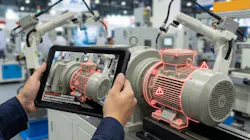
Precision and reliability have long been gold standards in manufacturing, and in the era of higher precision products, that requirement has intensified. Automation World recently interviewed Chase Boehlke (CB), presales specialist for servo drives at Siemens USA, and Matt Prellwitz (MP), drive technology product manager for Beckhoff USA, to get their insights on the most promising technologies enabling tighter tolerances for drives and motion control systems while remaining cost effective and easy to maintain.
AW: How can drives compensate for mechanical system variations and environmental factors that could impact precision such as temperature fluctuations, vibration or mechanical wear over time?
MP: Machine builders know that motors need to meet specific IP ratings like IP69K or a lower level of IP54. Selecting the right IP rating is one of the most basic ways to help maintain the motors' protection, but it's not the only factor. If the machine has intensive cleaning requirements, it can cause severe water ingress and temperature swings, leading to motor failures. Some vendors supply the means to pressurize a motor to prevent moisture from getting into the housing to deter motor winding failures.
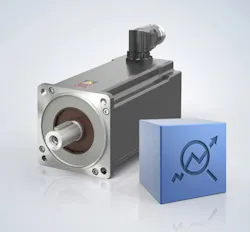
Beckhoff has taken measures a step further by integrating a diagnostic tool into standard servomotors for predictive maintenance. Beckhoff Smart System Diagnosis (B/SSD) continuously monitors temperature, humidity and vibration in real time, ensuring any necessary action can be taken in a timely manner to boost efficiency and maximize machine uptime.
CB: Siemens’ DriveSim software helps prepare for variable conditions and compensate for wear and tear by simulating worst case scenarios to minimize system impact before an application ever goes live. In many cases, performance variations can be further reduced using load side encoders directly connected to a drive, facilitating deviation detection and correction in real time. Additionally, integrated motor temperature feedback is incorporated into our servo control algorithms, while vibration and condition monitoring systems can operate in parallel with our drive solutions. These capabilities provide deeper insight into system health and long term performance.
AW: What diagnostic and monitoring capabilities are built into your systems to predict potential precision degradation before it affects product quality and how do they integrate with existing manufacturing execution systems?
MP: With our B/SSD encoder, you can monitor the vibration of the motor up to 50 g and correlate findings to the overall performance of the machine. Users can track the vibration of motors by integrating a camera system that detects quality during final product inspection after manufacturing. If the product fails inspection, the motor data can be referenced to determine whether high vibrations were observed during the manufacturing process or if additional information is needed based. By acting on data insights, users can increase the overall performance of the machine and take corrective measures on motion systems that will improve product quality.
For high-precision applications, it is common to incorporate multiple encoders: One at the motor to measure performance and additional encoders that can be used on the mechanical system.
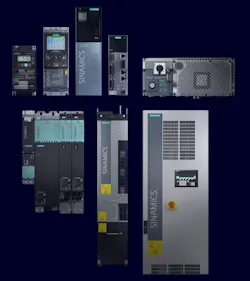
CB: The combination of native technology software objects with Sinamics servo drives allows for precise position monitoring and error limit following to continuously identify early signs of system degradation. Features such as vibration and oscillation suppression further enhance performance by actively reducing mechanical stress and wear, which helps extend machine life while maintaining consistent, high quality operation.
AW: What is the expected maintenance schedule and associated costs for maintaining specified precision levels, and how do these compare to less precise, but potentially more robust alternatives?
CB: Proper sizing is the foundation of success for any high performance system. Users can leverage Siemens’ TIA Selection Tool to assist with appropriate sizing or they can create a digital twin of the application. This type of upfront engineering fosters the optimal balance between precision and resilience. While incorporating digital twins and condition monitoring capabilities can add upfront cost, it results in greater design robustness, reducing unplanned downtime, improving long term reliability and minimizing the need for reactive maintenance.
While incorporating digital twins and condition monitoring capabilities can add upfront cost, it results in greater design robustness, reducing unplanned downtime, improving long term reliability and minimizing the need for reactive maintenance.
MP: Maintenance schedules vary greatly depending on the quality of drive technology and motion systems. Industrial applications can be harsh on motors and feedback systems, but specifying the right motor and feedback delivers an edge at the upset of machine design. Modern encoders are helpful for providing higher-level diagnostics and they’re very accurate in closed-loop systems.
For high-precision applications, it is common to incorporate multiple encoders: One at the motor to measure performance and additional encoders that can be used on the mechanical system. These are connected to the drive, and the axis positions or velocity are closed at the drive and can be precisely adjusted using a fast, deterministic fieldbus like EtherCAT.
If the product fails inspection, the motor data can be referenced to determine whether high vibrations were observed during the manufacturing process or if additional information is needed.
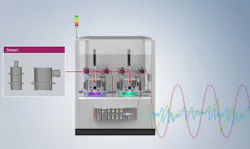
AW: How easily do motion control systems integrate with existing manufacturing infrastructure, including PLCs, SCADA systems and quality management systems, without requiring extensive retrofitting?
MP: Beckhoff’s TwinCAT automation software platform, which covers all aspects of machine control, handles integration from the PLC to SCADA systems and connectivity via IoT interfaces. TwinCAT adds plant-level and higher-level connections into a single environment from concept to commissioning. Typically, this was handled after the system was installed, which added extensive costs to cover a simple software hook to establish communication. Traditional approaches also lack real-time capabilities, which TwinCAT brings to all applications.
CB: Nearly all Siemens motion drives support Profinet and EtherNet/IP communication protocols, enabling seamless communication with both Simatic and third party PLC platforms. From there, operational data can be easily propagated to SCADA and other higher level central systems. In addition, several of our latest generation products now offer edge readiness with an integrated OPC UA server, providing secure, standardized data access and efficient vertical data flow.

AW: How do you support predictive maintenance strategies, and what training and support do you provide to help maintenance teams optimize system performance and longevity?
CB: Siemens supports predictive maintenance strategies through a combination of digital analytics and targeted workforce enablement. By leveraging our digital predictive maintenance solutions, customers gain continuous visibility into asset health and early insight into developing issues, enabling more proactive and efficient maintenance planning. Furthermore, the Sitrain training program complements these capabilities with practical, role based instruction that helps maintenance teams confidently interpret diagnostics, understand system messages, and apply best practices in daily operations. Together, Siemens digital services and training help reduce unplanned downtime, improve maintenance effectiveness and extend the operational life of industrial assets.
MP: With technologies like B/SSD, users can monitor the temperature, humidity and vibration with real-time feedback from Beckhoff motors. They can also monitor servo/stepper drive performance in real-time using our integrated TwinCAT Analytics tools and plug in algorithms to analyze the machine and ensure products are being manufactured to quality standards. Beckhoff offers a range of on-site and remote support resources to implement predictive maintenance technologies for motion systems as well as any other area of machine control and factory automation. A variety of training resources are available to the engineers who implement predictive maintenance technologies and the maintenance teams responsible for keeping machines running at peak performance.
More motion control insights from Automation World:
About the Author
 Beth Stackpole, contributing writer
Beth Stackpole, contributing writer
Contributing Editor, Automation World
 Leaders Logo
Leaders relevant to this article: