Siemens, FuelCell Energy Collaborate For Fuel Cell Power Technologies
Key Highlights
- Siemens will provide electrical systems for 100+ MW fuel cell projects.
- The collaboration combines fuel cells, battery storage, microgrid controls and electrical infrastructure.
- The companies aim to accelerate deployments, reduce costs and improve energy resilience.
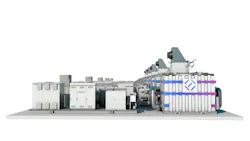
Siemens and FuelCell Energy announced a collaboration that aims to accelerate the growth of fuel cell-based power generation through aligning electrical design and supply with fuel cell technologies to support deployment of distributed energy systems.
As part of the collaboration, Siemens will design and supply electrical balance of plant (EBOP) systems for fuel cell installations, supporting the deployment of 100+ MW commercial projects, according to the company.
FuelCell Energy designs, manufactures, operates, and services fuel cell power plants for a range of applications including data centers, industrial facilities, utilities, and other distributed generation customers. That will be combined with Siemens’ EBOP experience as a provider of electrical infrastructure for fuel cell-based power technologies.
The work includes joint project development spanning engineering, integration, and delivery of distributed energy systems incorporating fuel cells, battery energy storage, microgrid controls, and medium-voltage electrical equipment. The companies will also evaluate opportunities to scale and deploy technologies that could improve timelines, reduce costs and increase deployments, they said.
“The rapid growth of electrification and distributed energy is redefining how power must be delivered at scale,” said Kevin Brown, the head of sustainability solutions, electrification and automation at Siemens Smart Infrastructure USA. “By combining FuelCell Energy’s fuel cell technology with Siemens’ electrical infrastructure, service, and integration expertise, we can deliver scalable, on-site power solutions for energy-intensive applications – helping customers deploy power faster, scale with confidence, and advance their transition to lower-emission, more resilient energy systems.”
Additional efforts include pilot projects and solution development initiatives to assess new applications for fuel cell systems and electrical infrastructure, including medium-voltage DC power delivery and modular electrical systems, according to the companies.